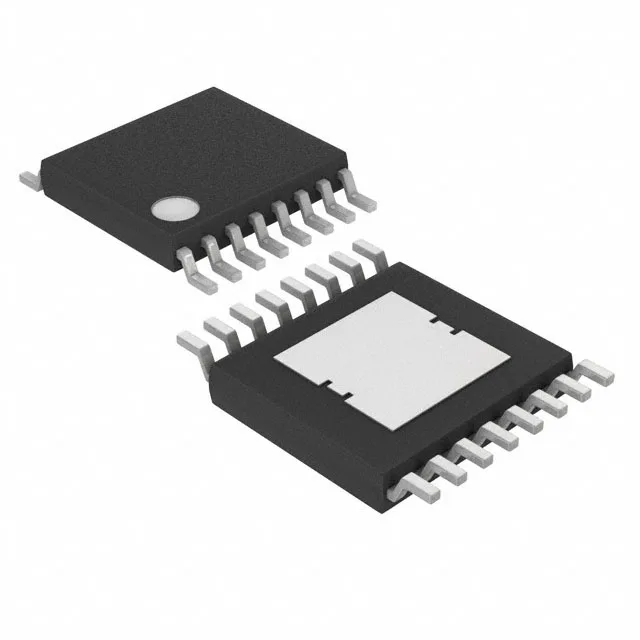
Analog Devices MAX25610AAUE/V+ — Microcontrollers & Processors (MCU / MPU / DSP)

MAX25610AAUE/V+ LED Driver, Buck-Boost, AEC-Q100, 16-TSSOP

MPNMAX25610AAUE/V+
End of Life

Analog Devices MAX25610AAUE/V+ automotive LED driver, DC-DC regulator, buck-boost topology, 400 kHz, single-channel 20 mA, analog/PWM dimming, AEC-Q100, 16-TSSOP-EP exposed pad, tube.

$6.15Ref. price · indicative, final on quote
Packaging16-TSSOP (0.173", 4.40mm Width) Exposed Pad
StockContact for availability
Lead timeIn Stock wk
MOQ1 pcs
  • 100% new & originalTraceable channels only — no refurbs, no pulls, no remarked parts.
  • Date & lot codes on quoteStated per line before you commit; label photos on request.
  • MSL-compliant ESD packingMoisture-sealed bags with indicator cards; reels photo-verified.
  • PayPal buyer protectionPay by T/T, PayPal or Payoneer — card payments covered end to end.

Specifications

MAX25610AAUE/V+ Technical Specifications
ParameterValue
TypeDC DC Regulator
SeriesAutomotive, AEC-Q100
Mounting typeSurface Mount
Voltage - output4.7V ~ 5.3V
Voltage36V
Current - output (Channel)20mA
Frequency400kHz
Number of outputs1
Operating temperature-40°C ~ 125°C (TA)
DimmingAnalog, PWM
PackageTube
TopologyStep-Down (Buck), Step-Up (Boost)
ApplicationsAutomotive, Lighting
Case16-TSSOP (0.173\", 4.40mm Width) Exposed Pad
Internal switchYes

Product details

What this automotive LED driver does on your board

The MAX25610AAUE/V+ is a single-channel DC-DC regulator built to drive LEDs in automotive lighting — headlamps, daytime running lights, or interior strips — where the input rail bounces from a cold-crank 5 V up to a load-dump 36 V. Its buck-boost topology means it can step the voltage up or down to keep the LED string at a regulated 4.7 V to 5.3 V output, regardless of whether the battery is sagging or the alternator is charging. The internal switch handles the power conversion, so you don't need an external FET — just the inductor, sense resistor, and a few passives to complete the supply.

Dimming and switching frequency choices

Both analog and PWM dimming are supported — analog dimming adjusts the LED current linearly, while PWM dimming modulates the on-time at a frequency above visible flicker, keeping the color temperature stable. The 400 kHz switching frequency is a middle ground: high enough to keep the inductor small (around 10 µH typical), low enough to avoid excessive switching losses in the internal FET.