What the 120Kbps data rate means for your serial link
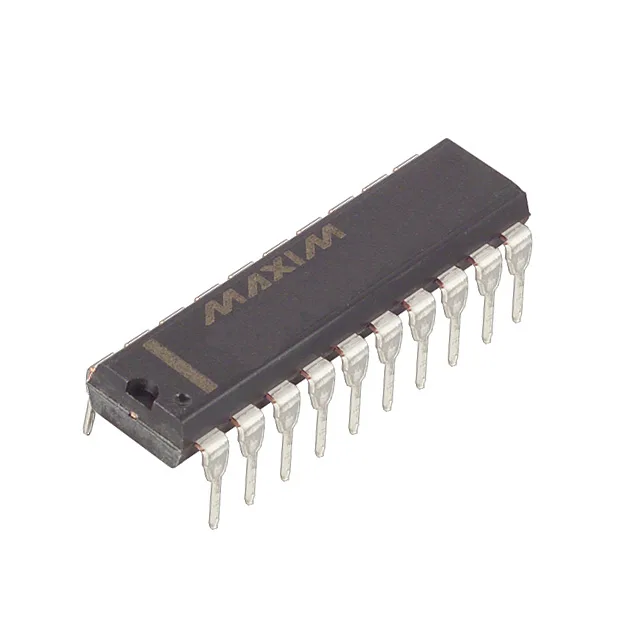
The MAX233AEPP+G36 is an RS232 transceiver with a 120Kbps data rate ceiling. For a typical UART running at 115200 baud — the most common rate in embedded systems — this part has margin; the bit period at 115.2K is 8.68 µs, well within the transceiver's propagation delay budget. If you need 230.4K or 460.8K, this part will not close the timing. Full-duplex operation means both transmit and receive paths are active simultaneously — no half-duplex turnaround delay. The 2/2 driver/receiver count gives you one full serial port plus one spare channel for flow control (RTS/CTS) or a second UART. The 500 mV receiver hysteresis provides 250 mV of noise margin on the receive side — enough to reject common-mode noise on long RS232 cables without external filtering. This is the same hysteresis used in the MAX232 family; the difference here is the integrated charge-pump capacitors (no external 1 µF caps needed).
The supply range is 4.75V to 5.25V — a tight 5V ±5% window. This is a 5V-only part; it will not run from 3.3V. If your board has a 5V rail already (legacy industrial, PLC backplane, or a 5V MCU), this is a direct drop-in. For mixed-voltage designs, you need a separate 5V supply or a level translator. The 20-PDIP package is through-hole — breadboard-friendly for prototyping, but also a valid choice for low-volume production where hand-assembly or socketing is preferred over SMT.
Active lifecycle and compliance documentation
The part is supplied in tube packaging — 20-DIP tubes, standard for through-hole ICs.