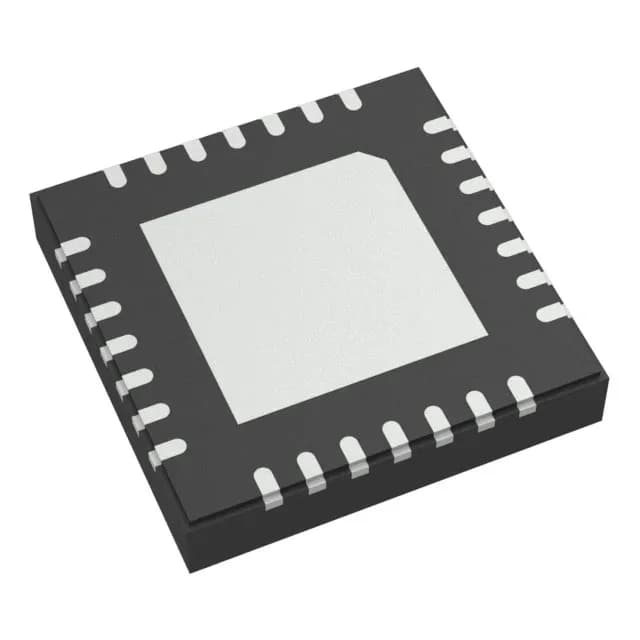
Analog Devices MAX20034ATIS/VY+ — Analog & Data Acquisition

MAX20034ATIS/VY+ Automotive Dual Step-Down Controller

MPNMAX20034ATIS/VY+
End of Life

Maxim Integrated MAX20034ATIS/VY+, Automotive AEC-Q100 dual step-down (buck) controller, 3.5V to 36V supply, 220kHz to 2.2MHz switching, -40°C to 125°C, 28-TQFN wettable flank package.

$5.22Ref. price · indicative, final on quote
Packaging28-WFQFN Exposed Pad
StockContact for availability
MOQ1 pcs
  • 100% new & originalTraceable channels only — no refurbs, no pulls, no remarked parts.
  • Date & lot codes on quoteStated per line before you commit; label photos on request.
  • MSL-compliant ESD packingMoisture-sealed bags with indicator cards; reels photo-verified.
  • PayPal buyer protectionPay by T/T, PayPal or Payoneer — card payments covered end to end.

Specifications

MAX20034ATIS/VY+ Technical Specifications
ParameterValue
SeriesAutomotive, AEC-Q100
Output typeTransistor Driver
Mounting typeSurface Mount, Wettable Flank
Voltage - supply (Vcc (Vdd))3.5V ~ 36V
Frequency220kHz ~ 2.2MHz
Number of outputs2
Output phases1
Duty cycle99%
Operating temperature-40°C ~ 125°C
PackageTray
FunctionStep-Down
TopologyBuck
Clock syncYes
Case28-WFQFN Exposed Pad
Control featuresCurrent Limit, Enable
Output configurationPositive
Synchronous rectifierYes

Product details

Dual-output automotive buck controller with wide input range

The Maxim Integrated MAX20034ATIS/VY+ is a dual-output step-down (buck) switching controller rated for automotive environments, carrying AEC-Q100 qualification. It accepts a supply voltage from 3.5 V to 36 V, making it suitable for 12 V and 24 V vehicle electrical systems with margin for load-dump transients. The part integrates two independent controller channels in a single 28-TQFN (5x5 mm) package with a wettable flank for automated optical inspection of solder joints.

Switching frequency and clock synchronization

The switching frequency is programmable from 220 kHz to 2.2 MHz. Operating at the lower end maximises efficiency by reducing switching losses; the upper end shrinks the inductor and output capacitor footprint. The part also accepts an external clock synchronisation signal, which lets the designer phase-shift multiple converters to spread the EMI spectrum — a common requirement when passing CISPR 25 Class 5 radiated emissions tests.

Temperature range and automotive deployment

The operating temperature range spans -40°C to 125°C, covering under-hood, engine bay, and exterior-mounted electronics. The 99% maximum duty cycle allows the output to stay in regulation through cold-crank events where the battery voltage dips below 6 V. Synchronous rectification is built in, so no external Schottky diode is needed for the low-side switch — that saves one component per output and improves efficiency at high load.

Control features and output configuration

Each output is independently enabled, and the controller includes current limiting. The output configuration is positive, meaning the IC drives external N-channel MOSFETs on both the high-side and low-side positions. The transistor-driver output type is compatible with standard logic-level and standard-level FETs.

Frequently asked questions

Can MAX20034ATIS/VY+ be used as a dual-output step-down controller?

Yes, the part integrates two independent step-down controller channels in one package, each with its own enable and current limit. It drives external N-channel MOSFETs for both channels.

Is MAX20034ATIS/VY+ compatible with my existing 12V automotive power supply design?

The 3.5 V to 36 V input range covers 12 V nominal systems with margin for cold-crank (down to ~5 V) and load-dump (up to 36 V). The -40°C to 125°C temperature grade matches under-hood requirements.

How do I solder MAX20034ATIS/VY+ with wettable flank?

The wettable flank package (28-TQFN) has partial side leads that become visible after reflow, enabling automated optical inspection (AOI) of the solder fillet. Standard lead-free reflow profiles for QFN packages apply; no special stencil aperture is required beyond the manufacturer's recommended footprint.