What this part is and where it fits
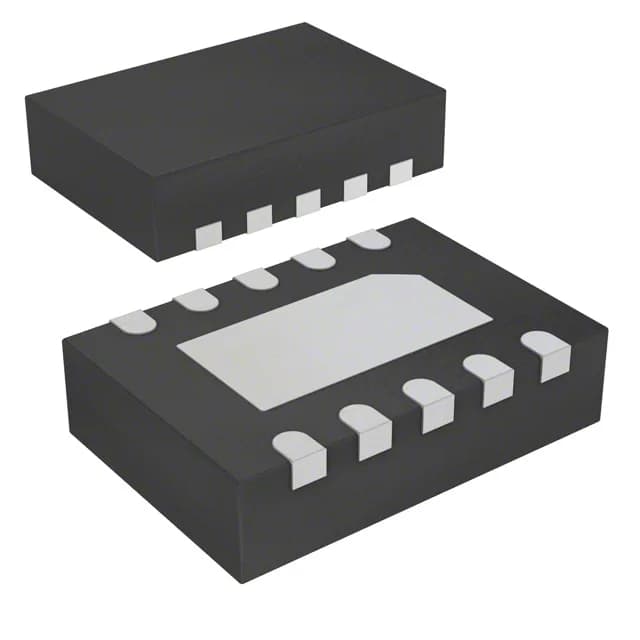
The MAX17681AATB+T is a step-down (buck) switching regulator from Analog Devices, built for industrial and automotive power rails. It takes a wide input from 4.5 V up to 42 V and delivers an adjustable output down to 0.9 V, with a single output rated for positive, isolation-capable configurations. The 200 kHz switching frequency is fixed, so the inductor and output capacitor values are predictable — no frequency-sync headaches on a shared bus. Synchronous rectification is built in, which keeps the external diode count at zero and the efficiency curve reasonable across load. The 10-TDFN (3x2 mm) exposed-pad package is small enough for space-constrained boards but needs a solid thermal via plan to pull heat out. Rated for -40°C to 125°C ambient, it will sit comfortably in an engine bay or a motor-drive enclosure.
Isolation-capable — what that means in practice
The 'Positive, Isolation Capable' output configuration means the controller can be wired as a flyback converter with a coupled inductor or transformer to produce an isolated output. This is not a fully integrated isolated module — you still need the transformer, feedback optocoupler, and secondary-side reference — but the controller itself supports the topology. If you need a simple non-isolated buck, it works just as well without the isolation components. The synchronous rectifier helps efficiency on the primary side, but in an isolated design the secondary-side rectification is external. For a quick field swap, the 10-TDFN package is small but the exposed pad requires a reflow profile — not a hand-solder-friendly part unless you have a hot-air station and a steady hand. Keep a stencil or pre-tinned pad in the kit if you plan to replace this on site.
Lifecycle and compliance
It is ROHS3 compliant, which covers the current EU RoHS directive without exemptions.