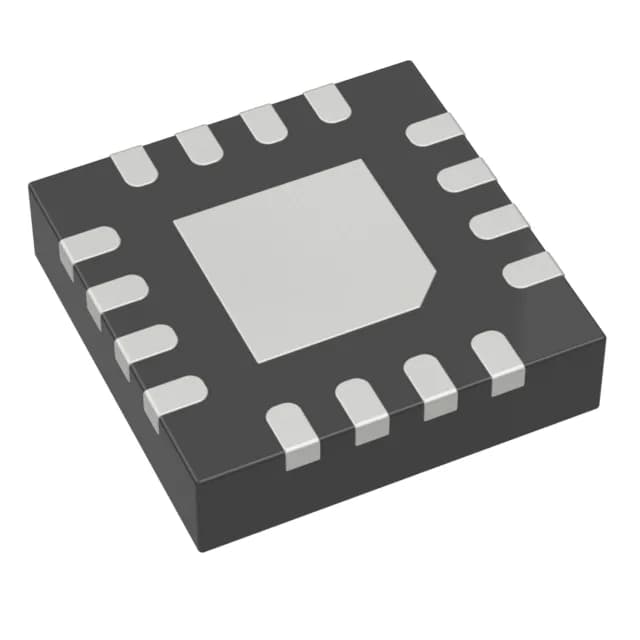
36V input, 2A output — sizing the rail
The MAX17632CATE+T is a step-down (buck) regulator from Maxim Integrated that handles input rails from 4.5V up to 36V and delivers a regulated adjustable output from 0.9V to 32.4V at 2A continuous. The 36V max input covers 24V industrial buses, 12V automotive systems with load-dump transients, and battery-powered equipment where the rail sags to 4.5V before the undervoltage lockout cuts in. A single output, positive polarity, with the output voltage set by a resistor divider on the FB pin. The integrated synchronous rectifier means no external Schottky catch diode is needed — the low-side FET handles the freewheeling current internally. This saves a diode's BOM cost, board area, and one thermal source, which matters when you're routing a 2A output in a 3x3 mm QFN footprint. Switching frequency is programmable from 400kHz to 2.2MHz via a resistor on the RT pin. At the low end you get better efficiency from smaller inductor AC losses; at the high end you shrink the inductor footprint and push switching noise above the AM band. The trade-off is switching loss in the FETs, which shows up as thermal rise at high input voltage and full load.
Temperature grade and where it runs
Rated for -40°C to 125°C ambient, this is an industrial-temperature part that also handles automotive under-hood and engine-bay environments. The 125°C ceiling means the junction can hit 150°C+ under load in a hot enclosure before the thermal shutdown trips — derate the output current if the ambient sits above 85°C in still air. The 16-WFQFN with exposed pad needs a solid thermal via array under the paddle to pull heat into the ground plane; without it the 2A rating is theoretical at elevated temperatures.
Lifecycle and sourcing posture
The MAX17632CATE+T carries an Active product status and is ROHS3 compliant.