Wide-input buck for industrial and automotive rails
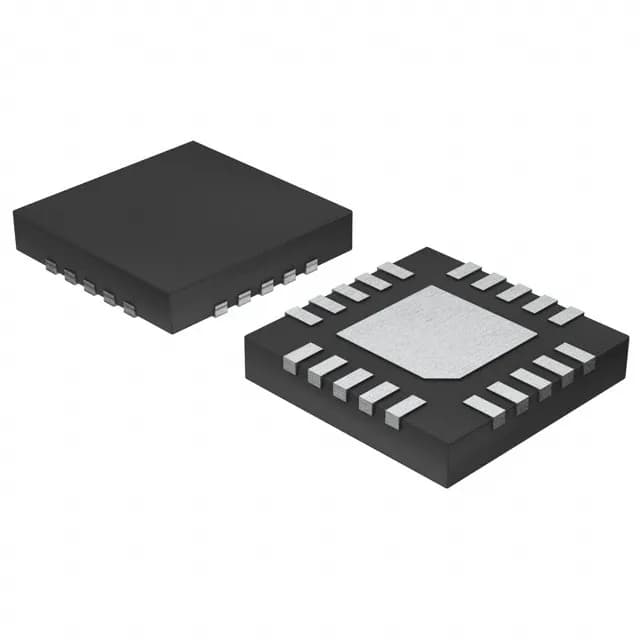
The MAX17543ATP+T is an Analog Devices Himalaya series step-down (buck) switching regulator delivering up to 2.5A continuous output from a 4.5V to 42V input range. The output is adjustable from 0.9V up to 37.8V, making it a flexible choice for generating intermediate bus voltages or point-of-load rails in systems that must handle 12V, 24V, or 48V nominal supplies with transients. Integrated synchronous rectification keeps the external BOM to an inductor and a few capacitors — no external catch diode needed. The switching frequency is programmable from 100kHz to 2.2MHz, letting the designer trade efficiency against inductor footprint. The 20-pin TQFN (4x4 mm) package with exposed pad helps pull heat into the board plane.
Active production — no LTB concern
The MAX17543ATP+T carries an Active product status.
What the 4.5V to 42V input range means for your rail
The 4.5V minimum input means this part will start cleanly from a 5V rail with margin, and the 42V maximum covers 24V industrial buses with headroom for transients up to 40V. For automotive designs on a 12V battery line, cold-crank dips to 6V are still above the undervoltage lockout threshold. The 2.5A output is a practical ceiling for powering FPGAs, sensor clusters, or communication modules from a single converter. The adjustable output down to 0.9V suits modern low-voltage cores, while the 37.8V upper limit allows generating a 24V auxiliary rail from a 48V supply.
Rework and package notes
The 20-TQFN (4x4 mm) package has a 0.5 mm pitch — manageable under a hot-air station with a fine nozzle. The exposed pad on the bottom is the main thermal path; a good via-stitch pattern under the pad is essential for keeping junction temperature under 125°C at full load. The part is RoHS3 compliant, so no lead-free process conflict. Orientation is marked by a pin-1 dot on the top surface; the datasheet should be consulted for the exact pad layout, but the package outline is standard for 20-lead TQFN.