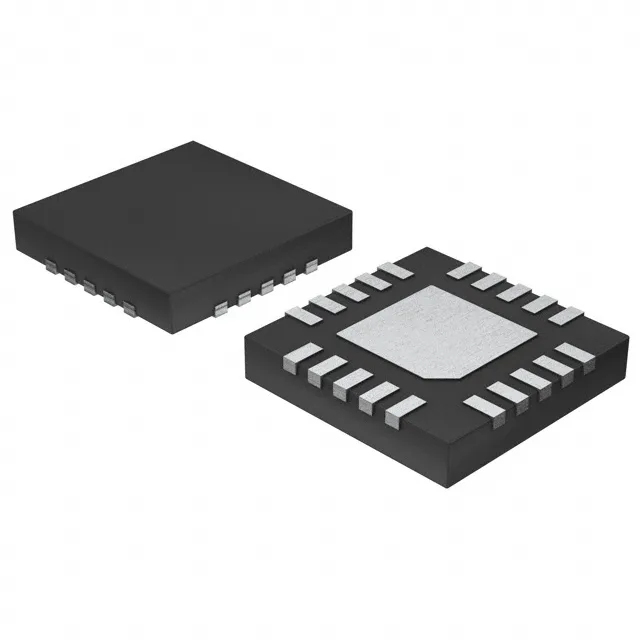
Analog Devices MAX17505ATP+T — Analog & Data Acquisition

MAX17505ATP+T Himalaya Buck, 1.7A, 60V Input

MPNMAX17505ATP+T
End of Life

Analog Devices Himalaya series, step-down buck regulator, MAX17505ATP+T, adjustable output, 1.7 A, 4.5-60 V input, 200 kHz-2.2 MHz, 20-TQFN exposed pad, active.

$5.61Ref. price · indicative, final on quote
Packaging20-WFQFN Exposed Pad
StockContact for availability
Lead timeIn Stock wk
MOQ1 pcs
  • 100% new & originalTraceable channels only — no refurbs, no pulls, no remarked parts.
  • Date & lot codes on quoteStated per line before you commit; label photos on request.
  • MSL-compliant ESD packingMoisture-sealed bags with indicator cards; reels photo-verified.
  • PayPal buyer protectionPay by T/T, PayPal or Payoneer — card payments covered end to end.

Specifications

MAX17505ATP+T Technical Specifications
ParameterValue
SeriesHimalaya
Output typeAdjustable
Mounting typeSurface Mount
Voltage - input4.5V
Voltage - output54V
Voltage - output (Min (Fixed))0.9V
Current - output1.7A
Frequency200kHz ~ 2.2MHz
Number of outputs1
Operating temperature-40°C ~ 125°C (TJ)
PackageTape & Reel (TR); Cut Tape (CT)
FunctionStep-Down
TopologyBuck
Case20-WFQFN Exposed Pad
Output configurationPositive
Synchronous rectifierYes

Product details

4.5 V to 60 V input, 1.7 A output — the wide-VIN Himalaya buck

The MAX17505ATP+T is a Himalaya-series step-down (buck) regulator from Analog Devices, delivering up to 1.7 A from a 4.5 V to 60 V input rail. With an adjustable output from 0.9 V to 54 V (positive only), it covers common logic, analog, and I/O supply voltages. The 1.7 A continuous output current suits moderate-power loads such as sensor nodes, auxiliary supplies in motor drives, or point-of-load regulation for FPGAs and microcontrollers.

Switching frequency and efficiency — synchronous rectification across 200 kHz to 2.2 MHz

The switching frequency is programmable from 200 kHz to 2.2 MHz. A lower frequency reduces switching losses and improves light-load efficiency, while a higher frequency shrinks the inductor and output capacitor footprint — a trade-off the designer controls via a single resistor. The 2.2 MHz ceiling keeps switching noise above the AM radio band and simplifies EMI filter design in sensitive analog front-ends.