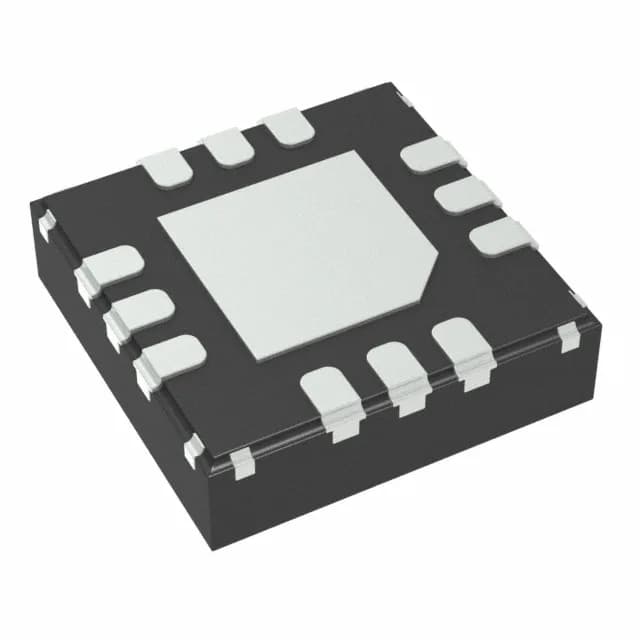
Analog Devices MAX16990ATCD/VY+T — DC-DC Power Modules

MAX16990ATCD/VY+T Automotive Boost/SEPIC Controller

MPNMAX16990ATCD/VY+T
End of Life

Analog Devices MAX16990ATCD/VY+T, Automotive AEC-Q100, Step-Up/Step-Down Controller, Boost/SEPIC Topology, 1 Output, 220kHz-1MHz, 4.5V-36V Supply, -40°C to +125°C, 12-TQFN-SW (3x3).

$5.33Ref. price · indicative, final on quote
Packaging12-WFQFN Exposed Pad
StockContact for availability
MOQ1 pcs
  • 100% new & originalTraceable channels only — no refurbs, no pulls, no remarked parts.
  • Date & lot codes on quoteStated per line before you commit; label photos on request.
  • MSL-compliant ESD packingMoisture-sealed bags with indicator cards; reels photo-verified.
  • PayPal buyer protectionPay by T/T, PayPal or Payoneer — card payments covered end to end.

Specifications

MAX16990ATCD/VY+T Technical Specifications
ParameterValue
SeriesAutomotive, AEC-Q100
Output typeTransistor Driver
Mounting typeSurface Mount, Wettable Flank
Voltage - supply (Vcc (Vdd))4.5V ~ 36V
Frequency220kHz ~ 1MHz
Number of outputs1
Output phases1
Duty cycle93%
Operating temperature-40°C ~ 125°C (TJ)
PackageTape & Reel (TR); Cut Tape (CT)
FunctionStep-Up, Step-Up/Step-Down
TopologyBoost, SEPIC
Clock syncYes
Case12-WFQFN Exposed Pad
Control featuresCurrent Limit, Enable, Frequency Control, Power Good
Output configurationPositive
Synchronous rectifierNo

Product details

What is the MAX16990ATCD/VY+T?

The MAX16990ATCD/VY+T is a current-mode PWM controller from Analog Devices designed for boost and SEPIC topologies in automotive systems. It is part of the Automotive, AEC-Q100 series, qualified for under-hood and cabin electronics where reliability over -40°C to +125°C junction temperature is required. The controller drives a single external N-channel MOSFET with a maximum duty cycle of 93%, switching from 220kHz up to 1MHz. Supply voltage range of 4.5V to 36V covers cold-crank and load-dump conditions common in 12V and 24V vehicle electrical systems.

Key features for the BOM decision

Clock sync input allows the switching frequency to be locked to an external clock, useful for avoiding beat frequencies in multi-rail power stages or sensitive RF sections. Control features include current limit, enable, frequency control, and power good. No synchronous rectifier means the controller uses an external diode — simpler but slightly lower efficiency than a sync-rectified design. The 12-TQFN-SW (3x3) package with wettable flank supports automated optical inspection (AOI) in production, a plus for automotive assembly lines.

Where it fits in the system

Typical applications include automotive LED lighting, infotainment supply rails, and sensor bias generators where a boosted or SEPIC-regulated voltage is needed from a battery bus. The 4.5V minimum supply lets it operate through engine start dips. The 125°C junction rating is sufficient for under-hood placement, though thermal pad layout and PCB copper area must be sized for the dissipation — the exposed pad is the primary heat path.

Frequently asked questions

Can the MAX16990 be used for automotive LED lighting?

Yes. The boost/SEPIC topology, wide supply range (4.5V to 36V), and AEC-Q100 qualification make it suitable for LED driver stages in automotive lighting, particularly where the input is a 12V or 24V battery bus and a regulated higher-voltage string is needed. The 220kHz to 1MHz switching range allows inductor sizing that fits compact automotive modules.