What the 30V input and 200mA output mean for your rail
The MAX16910CASA9+ is a positive-output LDO regulator from Analog Devices, delivering up to 200 mA with a maximum input voltage of 30 V. The 0.6 V dropout at full load means the input rail can sag to 2.1 V for a 1.5 V output before regulation is lost — useful in automotive or industrial systems where the supply bus dips during cranking or brownout. The single regulator is enabled via the Enable pin and includes a Reset output for power-good sequencing.
PSRR at 100 Hz — why it matters for audio and sensor rails
The 60 dB PSRR at 100 Hz means the regulator attenuates 100 Hz ripple (from a rectified mains or a switching pre-regulator) by a factor of 1000. For a 100 mVpp ripple on the input, the output sees only 100 µVpp — clean enough to power an analog front-end or a codec without additional post-filtering. Quiescent current is 30 µA typical, so the regulator's own draw is negligible in battery-backed systems.
Package and thermal — the exposed pad is your heat path
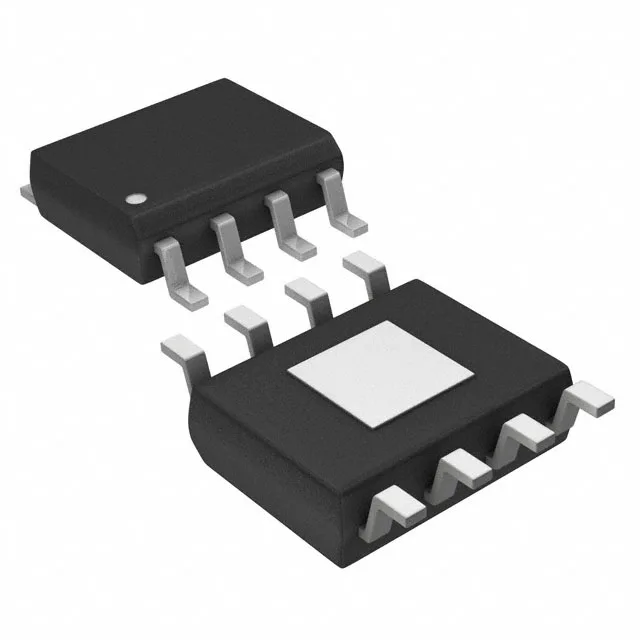
Housed in an 8-SOIC with exposed pad (SOIC-EP), the die's heat flows through the pad to the PCB copper. A thermal via array under the pad is expected for dissipating the dropout power at high input-output differentials — at 30 V in and 1.5 V out at 200 mA, the regulator dissipates 5.7 W, so the board layout must handle that thermal load. Protection includes over-temperature shutdown and short-circuit current limiting. The Enable pin allows the output to be gated by a microcontroller or a supervisor, and the Reset output signals when the output is within regulation — no external watchdog needed.