LED driver controller for automotive and backlight strings
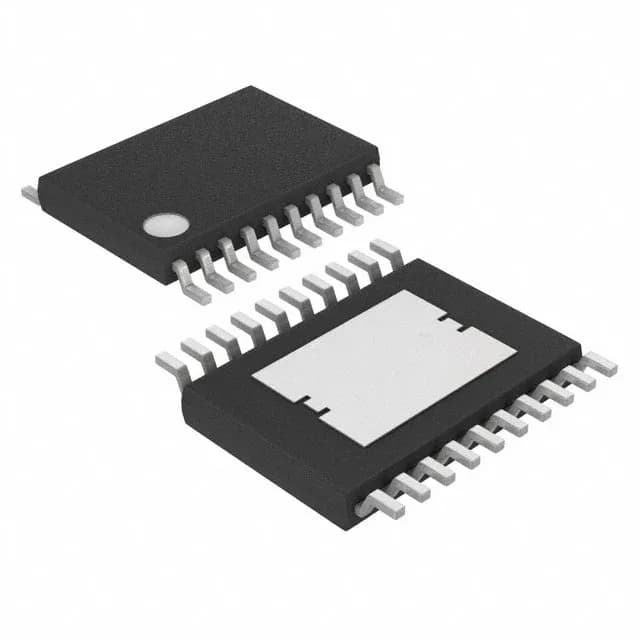
The Maxim Integrated MAX16834AUP+T is a DC DC controller designed to drive external MOSFETs for high-brightness LED strings. It supports SEPIC, step-down (buck), and step-up (boost) topologies, making it adaptable to a wide range of input-to-output voltage ratios in automotive lighting and LCD backlight applications. The controller operates from a 4.75 V to 28 V supply and delivers a regulated 27 V output to the LED load. Switching frequency is programmable from 100 kHz to 1 MHz, allowing the designer to balance inductor size against switching losses. Dimming is supported in both analog and PWM modes, providing flexibility for brightness control in daytime running lights, headlamps, or instrument-cluster backlighting. Housed in a 20-TSSOP package with an exposed pad for thermal dissipation, the controller is rated for operation from -40°C to 125°C ambient. This temperature range covers most automotive cabin and underhood locations, though the part does not carry an explicit AEC-Q100 grade in the listing.
Switching frequency range and inductor selection
The 100 kHz to 1 MHz programmable range directly affects the size of the external inductor and the switching losses in the MOSFET and controller. At 100 kHz, inductor ripple current is lower and core losses are reduced, but the inductor itself is physically larger. At 1 MHz, the inductor shrinks, but gate-drive losses and EMI filtering demand more careful layout. For automotive backlight modules where board space is tight, a higher frequency is typical; for noise-sensitive headlamp drivers, the lower end of the range may be preferred.
Dimming: analog and PWM modes
Analog dimming adjusts the LED current continuously, which is useful for smooth brightness transitions without audible noise. PWM dimming switches the LED string on and off at a controlled duty cycle, preserving color temperature across the brightness range and enabling high contrast ratios for backlighting. The MAX16834AUP+T handles both methods, so the application can choose based on whether flicker-free operation (analog) or precise brightness scaling (PWM) is the priority.
Lifecycle and sourcing posture
ROHS3 compliance is confirmed, which simplifies EU and other regulated-market BOMs.