Linear LED driver with PWM dimming — what the ratings mean for your BOM
The MAX16815ASA+ from Analog Devices is a single-channel linear LED driver delivering 100 mA per channel with an internal switch, rated for output voltages up to 39.6 V. Its input supply range spans 6.5 V to 40 V. The PWM dimming input allows external brightness control, and the -40°C to 125°C operating temperature range qualifies it for under-hood automotive and outdoor lighting environments. Applications include backlight, general lighting, and signage.
100 mA per channel — sizing the LED string
The 100 mA output current sets the maximum drive per LED channel. For a single LED string, this means the total forward current of the series LEDs must not exceed 100 mA. If the design calls for higher current per channel, this part is not the fit — look to a higher-current linear or switching driver instead. The 39.6 V output ceiling allows strings of up to roughly 10 to 12 white LEDs in series, depending on their forward voltage.
6.5 V to 40 V input — rail compatibility
The 6.5 V minimum supply means the driver will not operate from a 5 V rail; it needs at least a 12 V or higher supply. The 40 V maximum handles 24 V industrial rails with margin, and covers automotive load-dump transients if the supply is clamped below 40 V. For designs running from a 12 V battery, the 6.5 V min also covers cold-crank conditions down to about 7 V.
Package and thermal — 8-SOIC with exposed pad
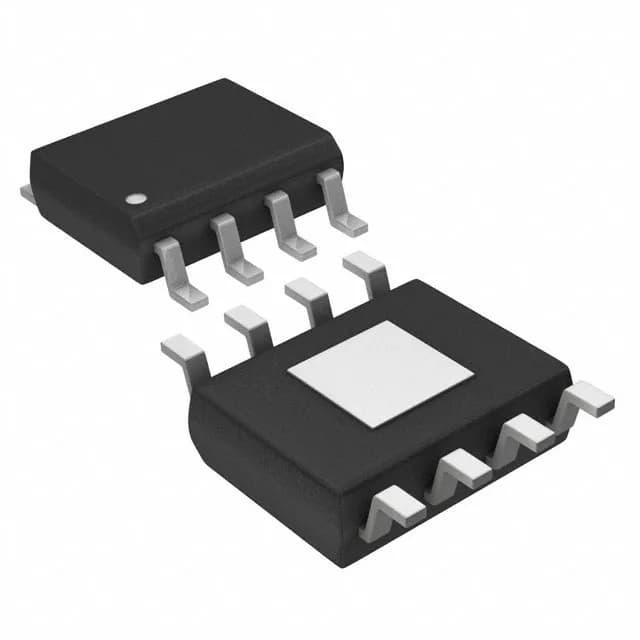
The 8-SOIC package with an exposed pad (8-SOIC-EP) requires a thermal land on the PCB for heat dissipation. The exposed pad must be soldered to a copper plane — without it, junction temperature will rise quickly at 100 mA continuous output. The -40°C to 125°C operating range covers automotive under-hood and outdoor enclosure environments, but the thermal design must keep the junction below the maximum at full load and ambient.
Lifecycle and compliance — active, ROHS3, no LTB risk
The MAX16815ASA+ is listed as Active with ROHS3 compliance. For new designs, this part carries no imminent obsolescence risk.