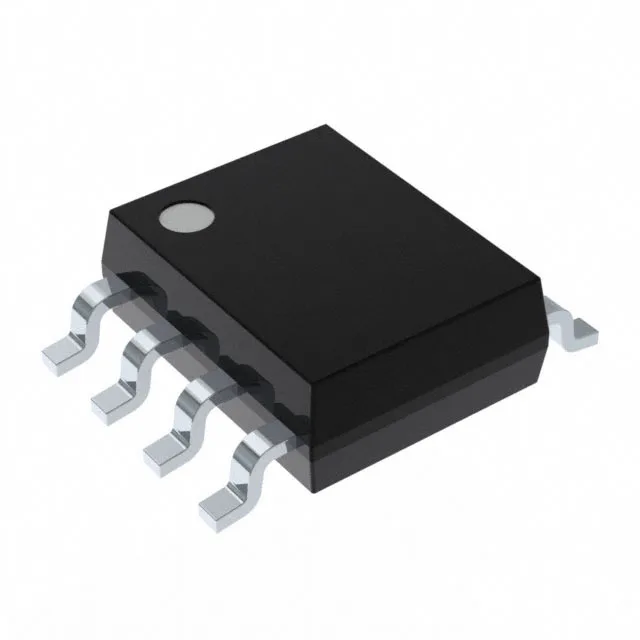
Analog Devices MAX1626ESA+T — DC-DC Power Modules

MAX1626ESA+T Buck Controller, 300kHz, 8-SOIC, Active

MPNMAX1626ESA+T
End of Life

Analog Devices MAX1626ESA+T step-down DC-DC controller, buck topology, 3V to 16.5V supply, 300kHz switching frequency, transistor driver output, 8-SOIC package, tape and reel.

$4.44Ref. price · indicative, final on quote
Packaging8-SOIC (0.154", 3.90mm Width)
StockContact for availability
Lead timeIn Stock wk
MOQ1 pcs
  • 100% new & originalTraceable channels only — no refurbs, no pulls, no remarked parts.
  • Date & lot codes on quoteStated per line before you commit; label photos on request.
  • MSL-compliant ESD packingMoisture-sealed bags with indicator cards; reels photo-verified.
  • PayPal buyer protectionPay by T/T, PayPal or Payoneer — card payments covered end to end.

Specifications

MAX1626ESA+T Technical Specifications
ParameterValue
Output typeTransistor Driver
Mounting typeSurface Mount
Voltage - supply (Vcc (Vdd))3V ~ 16.5V
Frequency300kHz
Number of outputs1
Output phases1
Duty cycle100%
Operating temperature-40°C ~ 85°C (TA)
PackageTape & Reel (TR); Cut Tape (CT)
FunctionStep-Down
TopologyBuck
Clock syncNo
Case8-SOIC (0.154\", 3.90mm Width)
Control featuresEnable
Output configurationPositive
Synchronous rectifierNo

Product details

Buck controller for 3V to 16.5V rails

The MAX1626ESA+T: Operating from a 3V to 16.5V supply range, it suits systems where the input rail varies — think multi-cell Li-ion, 5V or 12V intermediate buses, or unregulated wall adapters where the controller must stay alive through the dips. The 300kHz fixed switching frequency keeps the magnetics small enough for the 8-SOIC footprint while staying below the AM radio band — a practical choice for industrial control boards that share a chassis with sensitive analog front-ends.

100% duty cycle and external FET flexibility

With a maximum duty cycle of 100%, the controller can run the external pass element fully on — useful when the input voltage drops close to the output setpoint, as in battery-powered gear riding out a discharge curve. The transistor driver output (no synchronous rectifier on-chip) means the designer picks the N-channel MOSFET for the load current and thermal budget, trading BOM cost against efficiency at light load. An Enable pin allows the regulator to be sequenced or shut down by a system supervisor, pulling the controller into a low-power state without dropping the input rail. The single positive output configuration with a single phase keeps the compensation simple — a Type III network around the error amplifier is the usual starting point for stable loops with ceramic output capacitors.

Industrial temperature range and SOIC package

Surface-mount packaging in tape-and-reel or cut-tape options supports both volume pick-and-place and prototype builds.

Frequently asked questions

Does this controller include a synchronous rectifier?

No, the MAX1626ESA+T uses a transistor driver output without an internal synchronous rectifier, requiring an external Schottky diode for the low-side path.