Nano-power on/off control for battery and industrial rails
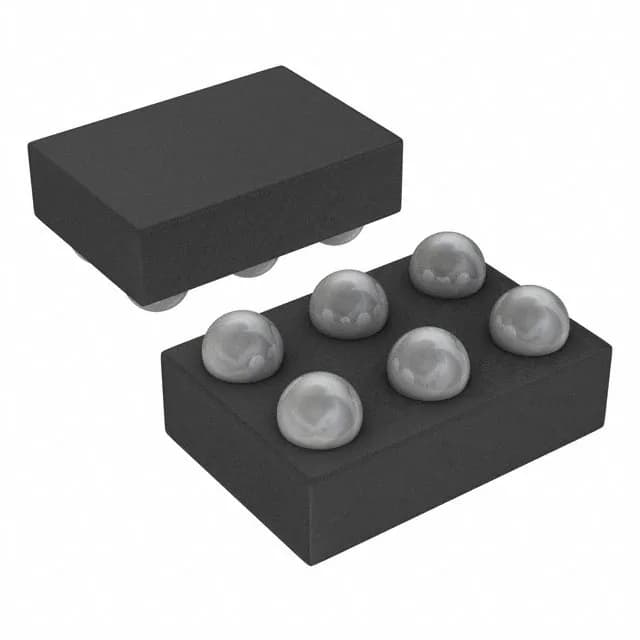
The Analog Devices MAX16163ANT0D+ is a nano-power on/off controller designed for always-on power management in battery-powered and industrial systems. The part comes in a 6-WLP package measuring 1.54x1.11 mm, which keeps board area minimal but demands a controlled assembly process for the wafer-level bumps.
265 µA supply — what it means for battery life
The 265 µA quiescent current is the headline number for any always-on controller. In a 1000 mAh Li-ion cell, this part alone draws about 0.026% of capacity per hour, leaving the bulk of the budget for the main processor and radio. Compare that to a typical discrete MOSFET-plus-PMIC solution that might burn 2–5 mA just keeping the rail alive. The nano-power spec is what makes this part a fit for IoT endpoints, portable medical devices, and battery-backed RTC domains where every microamp is budgeted.
The wide input range means this controller can sit directly on a single-cell Li-ion battery (2.7 V–4.2 V), a 3.3 V regulated rail, or a 5 V industrial bus without an extra pre-regulator. The 1.7 V minimum covers deeply discharged primary cells or low-dropout scenarios in energy-harvesting designs. The 5.5 V maximum is the absolute ceiling — keep input transients below that to avoid stressing the WLP's thin oxide.
6-WLP package — footprint and assembly
It saves board area versus a DFN or SOT-23, but the trade-off is that the bumps are the only mechanical and electrical connection — no mold compound to absorb stress. The package is surface-mount and ships in Strip form, which typically means a carrier tape for pick-and-place. The tiny footprint means the PCB layout must route traces between bumps — a fan-out via pattern under the part is common.
Lifecycle and compliance
For new designs, there is no LTB risk to budget for. The part is not AEC-Q100 qualified per the record, so it is not formally released for automotive-grade PPAP — stay with industrial and commercial applications.
Sourcing and supply posture
For dual-sourcing resilience, the MAX16162 is a known family variant; verify pin-compatibility and feature differences against your specific on/off logic requirement before substituting.