3.075V fixed-threshold supervisor for a 3.3V rail
Its active-low, open-drain output asserts reset when the monitored rail drops below that threshold and holds it for an adjustable/selectable timeout period after the rail returns. The open-drain output lets it interface with any logic voltage by pulling up to the downstream rail, and the adjustable timeout gives the designer control over the power-on reset delay to match downstream IC startup timing.
The 3.075V threshold is factory-trimmed for a nominal 3.3V supply rail. It provides a reset trip point roughly 7% below the nominal rail, which gives enough margin to catch a brownout without nuisance tripping on normal ripple. Because the threshold is fixed, there is no external resistor divider to set the trip point — the BOM saves two resistors and the PCB area they consume. If your design needs a different trip voltage, this is the wrong part; look for an adjustable-threshold supervisor in the same family.
Adjustable reset timeout — tuning the startup sequence
The reset timeout is adjustable/selectable via an external capacitor on the CT pin (per the datasheet application circuit). This lets you set the delay from microseconds to hundreds of milliseconds, matching the rise time of a slow power rail or the initialization time of an FPGA or SoC. A short timeout gets the system running quickly after a glitch; a long timeout ensures all rails are stable before the processor releases reset. The capacitor value is the only additional component, keeping the BOM count low.
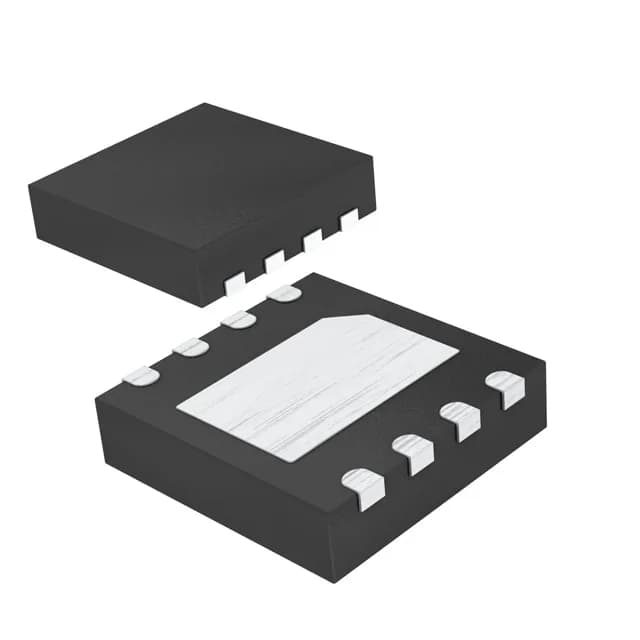
Package and footprint — 8-TDFN (3x3 mm)
Housed in an 8-WDFN with exposed pad, the 8-TDFN (3x3 mm) package is a compact, surface-mount footprint suited for space-constrained designs. The exposed pad provides a low thermal resistance path to the PCB, which matters if the part is dissipating power from the pull-up resistor or operating in a high-ambient environment. The 3x3 mm body is a common supervisor footprint, so PCB layout reuse across multiple designs is straightforward.