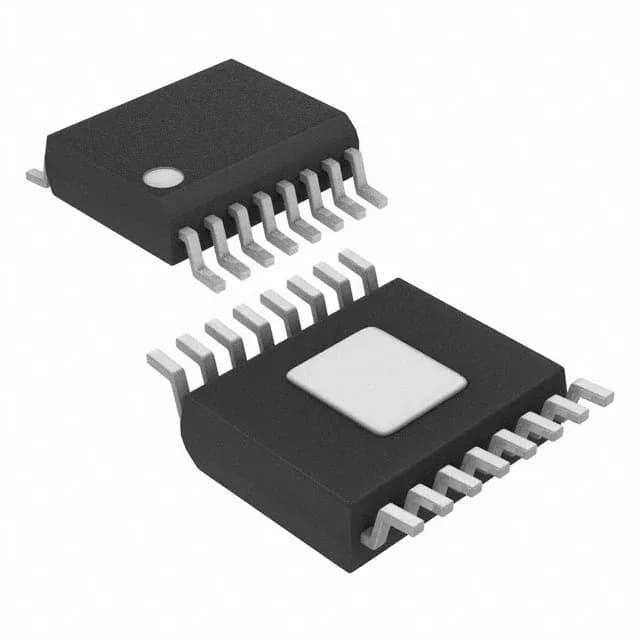
What this buck controller does and where it fits
Switching frequency is programmable from 100kHz to 1MHz via a resistor on the RT pin, allowing the designer to trade off efficiency against inductor and capacitor size. The 87.5% maximum duty cycle supports moderate step-down ratios; for very low output voltages (e.g., 1.8V from 24V), the duty cycle limit is not a constraint, but the minimum off-time may set a practical lower bound on output voltage at high switching frequencies.
Key ratings and what they mean for the BOM
Switching frequency from 100kHz to 1MHz is set by a single resistor. Lower frequencies (100kHz–300kHz) reduce switching losses and ease layout but require larger magnetics; higher frequencies (500kHz–1MHz) shrink the inductor and output capacitor but increase gate-drive losses and make PCB layout more critical to avoid noise coupling. The controller does not have a clock-sync input, so multiple converters must be synchronised externally or operated with spread-spectrum if beat-frequency noise is a concern.
Package and mounting
Tape & Reel (TR) packaging is intended for automated pick-and-place assembly; Cut Tape (CT) is available for prototyping and low-volume builds. The ROHS3 compliance means the part is fully lead-free and compatible with lead-free reflow profiles.
Lifecycle and sourcing
The MAX15046BAEE+T is listed as Active in production. For dual-sourcing or supply resilience, the buyer should qualify the part directly with the manufacturer or through an authorised distributor.