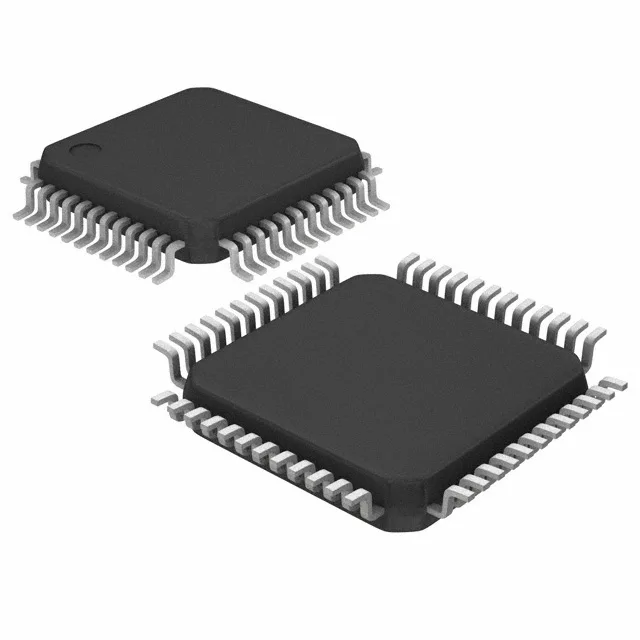
16-channel high-voltage analog switch, ±160V capable
The MAX14802CCM+: That voltage range puts it in a class above typical ±15V or ±20V CMOS switches — it handles ATE pin drivers, medical ultrasound beamformers, and high-voltage instrumentation front-ends where the signal swing needs headroom.
48Ohm on-resistance with 2.4Ohm channel matching
Each switch presents a maximum 48Ohm on-resistance, with channel-to-channel matching held to 2.4Ohm max. That matching figure matters when you are routing multiple analog channels through the same IC — the gain error across channels stays tight without per-channel trim. Off-leakage is 2µA max, and channel capacitance is 11pF, so the switch does not load the signal path excessively at lower frequencies. Charge injection is 820pC — a fairly high number driven by the large internal switch geometry needed for the high voltage rating. In a sample-and-hold or precision DAC output stage, that injected charge will show up as a glitch; plan a track-and-hold settling time or use an external clamp if the application is sensitive. The -3dB bandwidth is 20MHz, and crosstalk between channels is -80dB at 5MHz. For a 16-channel switch running ±160V rails, that crosstalk figure is respectable — adjacent channels carrying large signals will not bleed noticeably into a quiet channel at audio or low-IF frequencies.
3.5µs switching, 48-LQFP surface-mount package
Turn-on and turn-off times are both 3.5µs max — symmetrical, which simplifies timing in multiplexed data acquisition or relay-replacement applications where you need a known break-before-make window. The part is specified over 0°C to 70°C, so it is aimed at commercial/industrial equipment, not automotive or extended-temperature outdoor gear. Packaged in a 48-LQFP (7x7mm) on tray, surface-mount only.