12-bit SAR ADC with SPI — what it is and where it fits
The Analog Devices MAX11627EEE+T is a 12-bit successive-approximation-register (SAR) ADC that digitises four single-ended inputs at up to 300k samples per second. It communicates over an SPI interface and runs from a single 2.7V to 3.6V supply rail — the same voltage powers both the analog and digital sections. The 16-pin QSOP package keeps board area tight, and the operating temperature range of -40°C to +85°C covers industrial and outdoor telecom enclosures without needing a mil-spec part.
Reference flexibility — internal or external
The MAX11627EEE+T accepts either an internal or an external voltage reference. Using the internal reference saves a component and a PCB trace; an external reference lets you set the full-scale range to match the sensor's output span or to share a precision reference across multiple ADCs. The choice is pin-strapped, so no firmware change is needed to switch.
Supply rails and logic-level note
Both the analog and digital supplies share the same 2.7V to 3.6V range. That means the SPI bus runs at the ADC's supply voltage — if your host MCU uses 5V logic, a level shifter or a separate supply scheme is required. The single-ended input range also tracks the reference, so with the internal reference enabled the input span is roughly the supply rail.
Package and rework
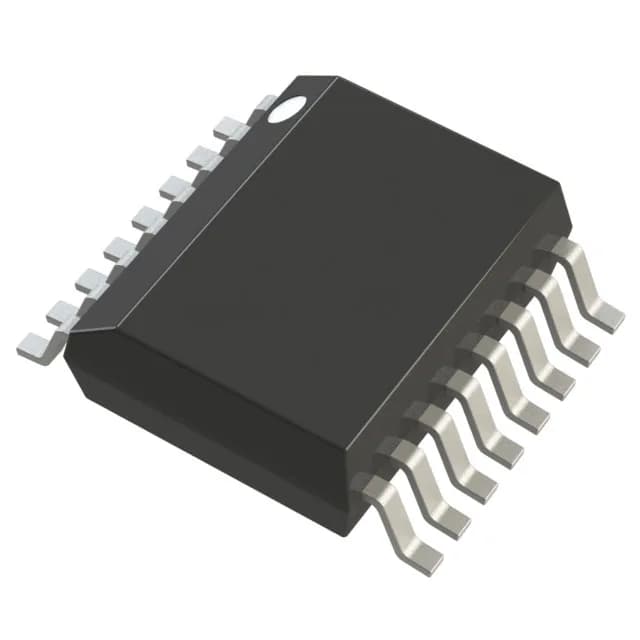
The 16-QSOP (3.90 mm body width) is a fine-pitch SSOP derivative. It reflows cleanly with a standard lead-free profile. The small thermal mass means it heats quickly under hot air — lift the part, not the pad.
Lifecycle and sourcing
The MAX11627EEE+T carries an Active product status, so there is no last-time-buy clock running. It is ROHS3 compliant.