8-bit SAR ADC with I2C — what it is and where it fits
The MAX11602EEE+ from Analog Devices (formerly Maxim Integrated) is an 8-bit successive-approximation register (SAR) ADC with an integrated input multiplexer, sample-and-hold, and I2C serial interface. It samples at 188 ksps and accepts either four or eight analog inputs configured as pseudo-differential or single-ended. The part operates on a single 5V supply for both analog and digital sections, and is specified over the industrial temperature range of -40°C to 85°C. Typical applications include multi-channel sensor monitoring in industrial control, data-acquisition modules, battery-monitoring systems, and portable instrumentation where a compact serial-interface ADC with moderate throughput is required.
Input configuration — pseudo-differential vs single-ended
The MAX11602EEE+ supports both pseudo-differential and single-ended input modes. In single-ended mode you get eight channels; in pseudo-differential mode you get four channels, each with a dedicated return (IN-) that rejects common-mode noise on the signal pair. That matters when your sensor signal and its ground reference travel more than a few centimetres on the PCB or through a harness — the pseudo-differential pair cleans up the reading without requiring a full differential amplifier up front. The ADC architecture is SAR, so no pipeline latency; the conversion result for a given channel is available on the next I2C read.
Package and supply — board-fit constraints
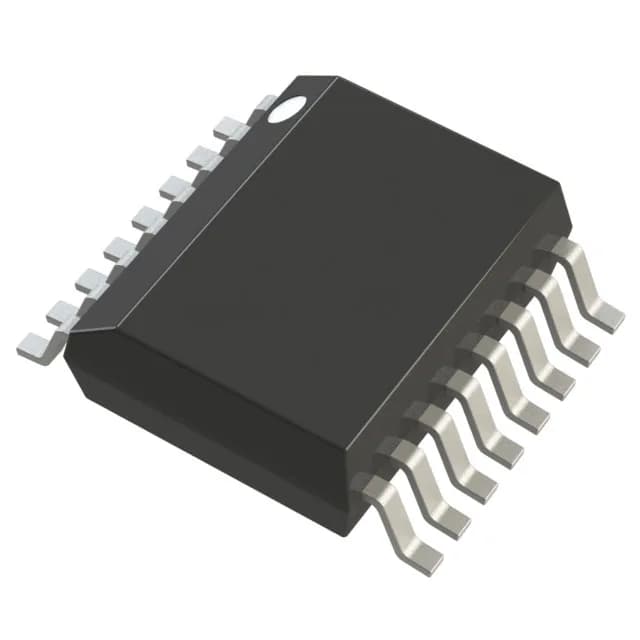
Housed in a 16-pin QSOP (3.90 mm body width), the MAX11602EEE+ occupies about the same footprint as a small op-amp. The supply is 5V nominal for both AVDD and DVDD.