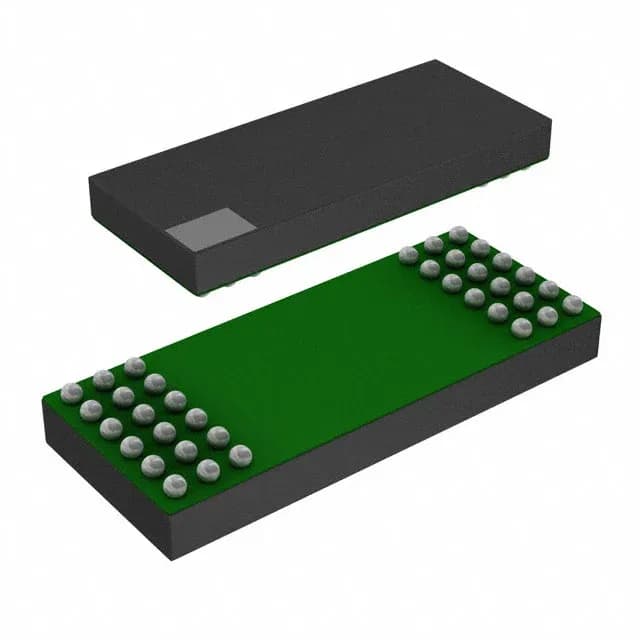
100 Mbps SPI isolator with 6000 Vrms — what that buys the design
The Analog Devices LTM2893CY#PBF is a 9-channel SPI digital isolator built on magnetic coupling technology, delivering a 100 Mbps data rate across a 6000 Vrms isolation barrier. That speed keeps up with fast SPI buses — quad-SPI and dual-SPI at full clock rates — without adding a cycle of latency. The 50 kV/µs common-mode transient immunity means it holds data integrity in motor-drive or inverter environments where ground bounce is a fact of life. It runs from a single 3V to 5.5V supply, so a 3.3V or 5V logic rail works without a secondary regulator. The 36-BGA (15x6.25 mm) package packs the 9 channels into a compact footprint, but note: there is no integrated isolated power — the secondary side needs its own isolated supply or a separate DC-DC converter.
9 channels, 6/6 inputs — how the channel count maps to SPI
The LTM2893CY#PBF provides 9 channels total, with 6 inputs on side 1 and 6 on side 2. That's enough for a full SPI bus (SCLK, MOSI, MISO, CS, plus a few GPIOs or interrupt lines) in both directions, with channels left over for handshake or status signals. The channel type is mixed: some are bidirectional, others unidirectional, which is typical for SPI where some signals (MISO, MOSI) need bidirectional isolation while others (SCLK, CS) are unidirectional. The 10 ns typical rise/fall time and 150 ns max propagation delay keep the signal edges clean at 100 Mbps, but the 150 ns delay means you need to account for it in timing closure — it's not a zero-delay isolator.
36-BGA: rework and layout reality
The 36-BGA (15x6.25 mm) package is surface mount with a 1.0 mm ball pitch typical for this class. That pitch is hand-reworkable with a hot-air station if you have a stencil and good flux — the balls are large enough to reball, but the BGA footprint means you cannot probe individual pins easily. The thermal mass is moderate; a preheat to 100°C helps avoid cold joints on the inner balls. No exposed pad, so all heat dissipation goes through the BGA balls — keep the PCB copper pours under the device for thermal relief.
The ROHS3 compliance covers the full substance restriction list, so it passes European and global environmental requirements without an exemption.