Isolated SPI with onboard DC/DC — what this part does
It provides 2500Vrms galvanic isolation between a 3-channel input side and a 3-channel output side, all unidirectional, so the SPI bus (clock, data in, data out, plus chip-select and control lines) crosses the barrier cleanly without an external isolated supply. The built-in isolated power rail means the remote-side interface ICs or sensors can be powered directly from the module, saving a separate isolated DC/DC converter and its associated board area.
Data rate, propagation delay, and transient immunity — the numbers that matter
The part supports SPI clock rates up to 4 MHz or 8 MHz depending on the mode (the two figures in the data rate field reflect a configurable setting). Propagation delay is a maximum of 100 ns in either direction, which keeps the SPI timing budget tight enough for most industrial peripherals — ADCs, DACs, or encoder interfaces — without needing to stretch the clock low time. Rise and fall times are typically 3 ns, so signal integrity on the BGA's short traces is straightforward. The common-mode transient immunity is a minimum of 30 kV/µs, which is the spec that matters when this isolator sits on a motor-drive or inverter board where fast-switching IGBTs or SiC FETs slam the ground plane with kilovolt-per-microsecond edges. If the CMTI is too low, data bits get corrupted; 30 kV/µs covers the vast majority of industrial drives.
Package and thermal handling — 32-BGA module
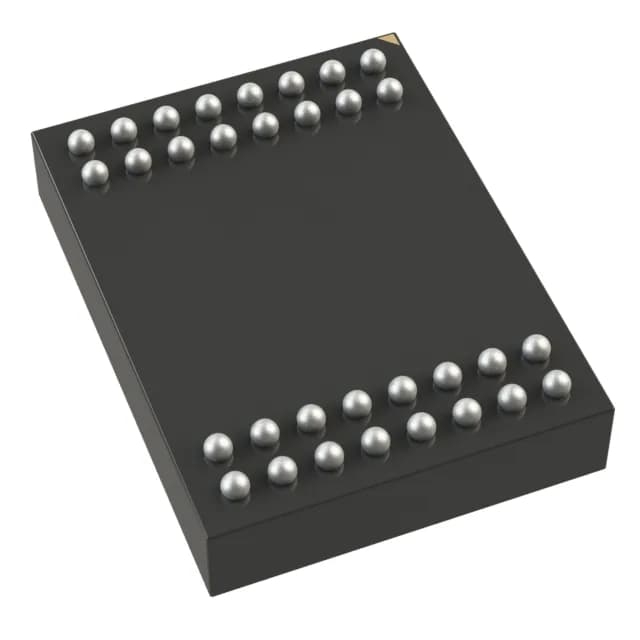
The LTM2886IY-3S#PBF comes in a 32-ball BGA module measuring 15 mm x 11.25 mm (supplier device package 32-BGA). It is a surface-mount module, not a bare die, so standard SMT assembly applies. The BGA footprint is the only package option. The module includes the isolation capacitors and the DC/DC converter inductors inside the package, so the external BOM is minimal — just supply decoupling capacitors.
Lifecycle and compliance
It is ROHS3 compliant, with no lead or restricted substances per the latest EU directive.