Six-channel I²C isolator with onboard isolated power
The LTM2883CY-3I#PBF is a 6-channel, unidirectional I²C digital isolator from Analog Devices' µModule® series. It integrates isolated power and magnetic coupling technology to provide galvanic isolation up to 2500Vrms between the I²C bus and the host controller. With a data rate of 400kHz, it supports standard and fast-mode I²C communication. The supply range of 3V to 3.6V makes it a direct fit for 3.3V I²C buses commonly found in industrial sensors, PLCs, motor drives, and isolated data-acquisition systems.
The 400kHz data rate matches the I²C fast-mode standard, so this isolator does not introduce a throughput bottleneck on a typical sensor or memory bus. The 30kV/µs common-mode transient immunity (CMTI) is the spec that matters in motor-drive or inverter environments: fast voltage transients on the isolated side can couple across the barrier and corrupt data. A 30kV/µs rating means the part holds the data path clean through the kind of switching noise a 600V IGBT generates at turn-off.
Six channels, three per side — channel allocation matters
The part provides 3 inputs on side 1 and 3 inputs on side 2, all unidirectional. That is enough for a full I²C bus (SCL, SDA plus an interrupt or reset line) on each side, but the unidirectional nature means you cannot run a bidirectional I²C data line through a single channel without external logic. In practice, the LTM2883CY-3I#PBF handles the clock and data lines as separate unidirectional paths, which is the standard approach for isolated I²C.
For industrial or automotive applications requiring -40°C to 85°C or wider, the extended-temperature suffix variants in the LTM2883 family would be the correct choice.
32-BGA footprint — layout considerations
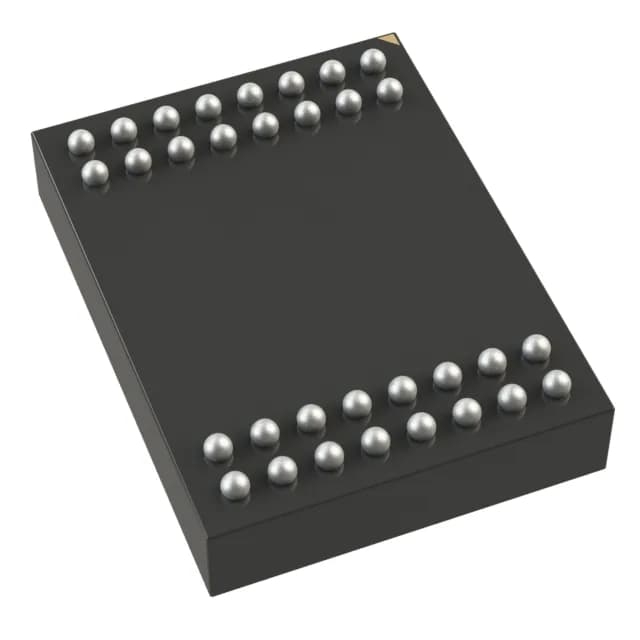
The 32-BGA package (15 x 11.25 mm, 1.27 mm pitch typical for this class) saves board area compared to an SOIC-wide isolator plus a separate isolated DC-DC converter. The BGA requires a solder-paste stencil and reflow profile tuned for the 0.5 mm to 0.8 mm ball diameter; hand-soldering is not practical.