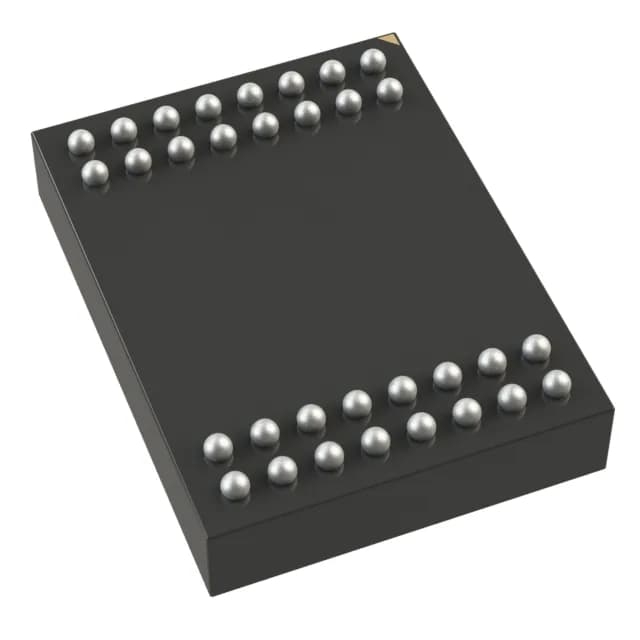
What this µModule packs — isolated RS232 with onboard power
It integrates four channels (two drivers, two receivers), magnetic coupling for 2500Vrms galvanic isolation, and an isolated DC-DC converter on the same substrate — no external transformer or separate power module needed. Data rate hits 10 Mbps, well beyond the 115 kbps or 1 Mbps typical of older RS232 parts, so it handles high-speed serial links without bit errors.
2500Vrms isolation — what it buys you in the field
The 2500Vrms rating is the reinforced isolation barrier between the RS232 bus side and the logic side. In a motor-drive cabinet or a PLC I/O card, that barrier protects the controller from ground loops, voltage surges, and common-mode transients that would otherwise fry the UART port. The common-mode transient immunity of 30 kV/µs (minimum) means the isolation holds even when a contactor slams in or a VFD switches at several kV/µs — the data link doesn't glitch or latch up.
Integrated isolated power — one less module to source
The isolated DC-DC converter built into the µModule generates the isolated-side supply rail internally. That saves a separate isolated power module (like a DCP01 or a discrete flyback) and the associated transformer, rectifier, and capacitor BOM. For a four-channel RS232 interface, it shrinks the board area to the 32-BGA footprint plus a few bypass caps. The trade-off: the BGA package (15x11.25 mm) requires a reflow profile and X-ray inspection — not a hand-solder repair job, but a standard SMT assembly line handles it fine.
10 Mbps data rate — faster than most RS232 needs
At 10 Mbps, this part runs RS232 at speeds that overlap with RS422/RS485 territory. Most RS232 links run at 115.2 kbps or 1 Mbps; the extra margin means the transceiver can handle higher baud rates for firmware updates over a serial cable or for debug consoles that push data faster. The 60 ns typical rise/fall time and 100 ns max propagation delay keep the eye open at 10 Mbps over a few metres of cable. If your application only needs 115 kbps, the speed is still fine — the part doesn't force a minimum data rate.
Active lifecycle — no LTB scramble
ROHS3 compliance is confirmed, so it passes the EU material restriction requirements without an exemption.
Closest functional alternative — ADM3252EABCZ
The ADM3252EABCZ from Analog Devices is the nearest functional second-source: it is also an isolated RS232 transceiver with integrated power (IsoPower technology), four channels (2/2), and a 2500Vrms isolation rating. The key difference is data rate — the ADM3252EABCZ caps at 460 kbps, while the LTM2882HY-5#PBF runs at 10 Mbps. If your design doesn't need the higher speed or the extended temperature, the ADM3252EABCZ is a pin-compatible alternative for dual-sourcing. The ADM2682EBRIZ is an RS422/RS485 part, not a direct RS232 replacement.