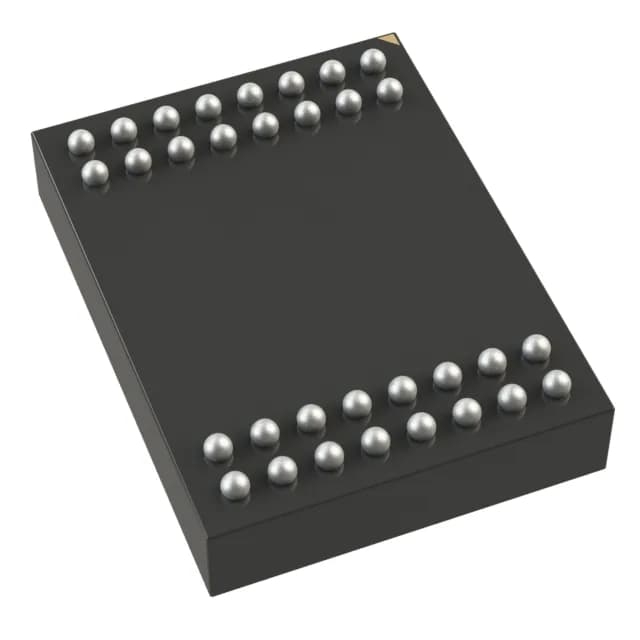
Isolated RS422/RS485 transceiver with integrated power
The LTM2881IY-5#PBF is an Analog Devices µModule isolated RS422/RS485 transceiver that integrates the signal isolation, isolated DC-DC converter, and line transceiver into a single 32-BBGA module. It uses magnetic coupling for the isolation barrier, delivering 2500Vrms of galvanic isolation between the bus side and the logic side. The part supports data rates up to 20Mbps and offers a common-mode transient immunity of 30kV/µs minimum, making it suitable for noisy industrial environments where fast voltage transients are present on the bus cable.
20 Mbps data rate and 30 kV/µs CMTI — what they mean on the bus
The 20Mbps data rate supports high-speed RS422/RS485 links for applications like encoder feedback, motor-drive commutation, or multi-drop sensor networks where throughput matters. The 30kV/µs common-mode transient immunity is the spec that matters when the transceiver is connected to cables running alongside motor drives or inverters — fast voltage edges from switching power stages couple into the bus, and a lower CMTI part can latch or corrupt data. This part's 30kV/µs rating gives margin over the 25kV/µs typical of competing integrated isolators.
32-BBGA module — rework and board layout
The 32-BBGA package (15x11.25 mm body) is a BGA module that contains the isolation transformer and all passives inside. It is a surface-mount device, but the large BGA footprint and the internal transformer mean the part has significant thermal mass. Reflow profile should follow the module's MSL rating — the part is MSL 3 out of the bag, so a bake is required if the moisture-barrier bag has been open past the floor-life window. The BGA balls are on a 1.27 mm pitch, which is hand-reworkable with a hot-air station if you have a stencil and good alignment marks.
Supply and temperature range
The part is ROHS3 compliant.
Lifecycle and sourcing
For new designs, this means no last-time-buy risk in the near term.