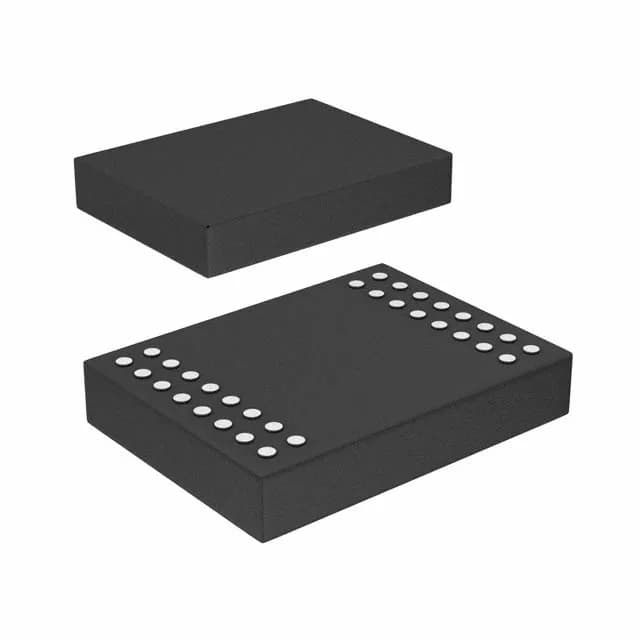
It integrates the magnetic isolation barrier, a DC/DC converter for isolated power, and the transceiver itself — so you don't need a separate isolated supply on the bus side. Typical applications include factory automation, motor-drive interfaces, building management networks, and any RS422/RS485 bus that needs a clean, isolated boundary.
Package and mounting
The 20 Mbps data rate supports high-speed RS422 links and fast RS485 networks without sacrificing bus length. At that speed, the 30 kV/µs common-mode transient immunity becomes the real differentiator: it keeps the receiver from latching or missing bits when a motor drive or VFD kicks a kilovolt transient across the isolation barrier. The ADM2582EBRWZ-REEL7, a close functional peer, tops out at 16 Mbps and 25 kV/µs CMTI — so if you're pushing the bus speed or have a particularly noisy environment, the LTM2881 holds a measurable edge.
Commercial temp range — design-in note
If the board needs to live in an unheated cabinet or near a hot motor drive, the industrial-temperature ADM2582EBRWZ-REEL7 (-40°C to 85°C) is a better fit, though you'll trade a few Mbps and some CMTI margin. The LTM2881CV-5#PBF comes in a 32-BLGA package (15x11.25 mm) with surface-mount termination; the LGA footprint is straightforward for reflow but check your stencil aperture for the large thermal pad — it carries the heat away from the integrated DC/DC converter.
It is ROHS3 compliant.