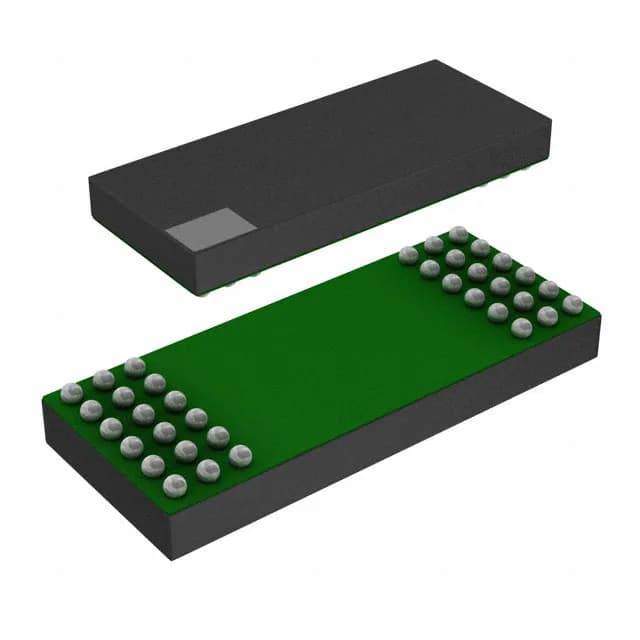
7500Vrms I²C isolator for noisy, high-voltage environments
The Analog Devices LTM2810HY-I#PBF is a µModule I²C digital isolator that packs six unidirectional channels with magnetic coupling into a 36-BGA package. Its headline rating is 7500Vrms isolation, which means it can sit between a low-voltage controller and a high-side I²C bus in motor drives, industrial PLCs, or medical equipment where galvanic isolation is mandatory. The 400kHz data rate matches standard I²C fast mode, so no speed penalty on the bus.
36-BGA package — layout and rework considerations
The 36-BGA (22x6.25mm) is a ball-grid array module, not a hand-solderable SOIC. For the rework lab, that means a hot-air profile with a preheat zone and a stencil for the solder paste. The 1.27mm ball pitch is forgiving for a BGA, but the board needs a solder mask defined pad with via-in-pad avoided under the module. Decoupling should follow the datasheet layout: a 1µF ceramic per supply pin, placed within 5mm of the ball. The magnetic coupling technology inside handles the isolation, so no external transformer is needed.
Propagation delay and transient immunity — timing budget notes
Propagation delay is 500ns max in both directions, and pulse-width distortion is 50ns max. For a 400kHz I²C bus with a 2.5µs clock period, that 500ns eats 20% of the half-period — enough to matter if the bus has heavy capacitive loading or multiple slaves. The common-mode transient immunity is 50kV/µs minimum, which is high enough to reject motor-drive switching noise or ESD events without corrupting the I²C data. Rise and fall times are 350ns typical and 250ns max, so the edges are slew-limited; this helps emissions but means the bus pull-up resistors may need to be sized lower than usual to meet the I²C rise-time spec at 400kHz.