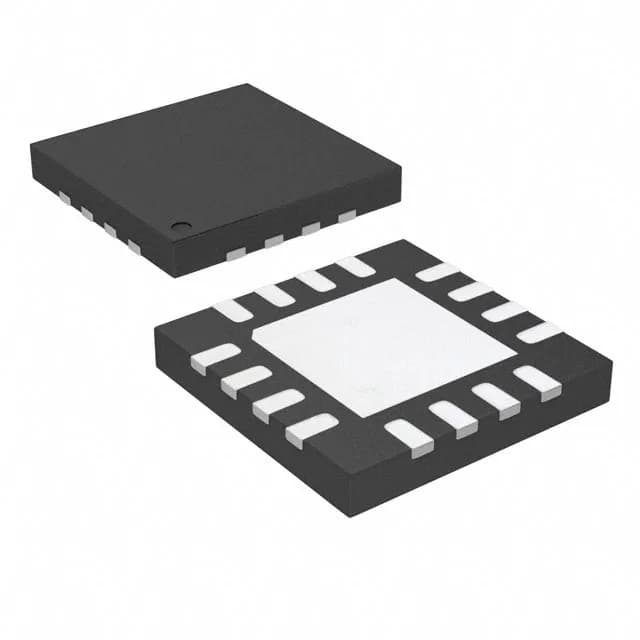
Analog Devices LTC7804EUD#PBF — Analog & Data Acquisition

LTC7804EUD#PBF Synchronous Boost Controller, 100kHz-3MHz

MPNLTC7804EUD#PBF
End of Life

Analog Devices LTC7804EUD#PBF, Low IQ Synchronous Boost Controller, Step-Up Topology, 4.5V to 40V Supply, 100kHz to 3MHz Switching, 16-QFN 3x3mm, -40°C to 125°C, Tube.

$6.41Ref. price · indicative, final on quote
Packaging16-WFQFN Exposed Pad
StockContact for availability
MOQ1 pcs
  • 100% new & originalTraceable channels only — no refurbs, no pulls, no remarked parts.
  • Date & lot codes on quoteStated per line before you commit; label photos on request.
  • MSL-compliant ESD packingMoisture-sealed bags with indicator cards; reels photo-verified.
  • PayPal buyer protectionPay by T/T, PayPal or Payoneer — card payments covered end to end.

Specifications

LTC7804EUD#PBF Technical Specifications
ParameterValue
Output typeTransistor Driver
Mounting typeSurface Mount
Voltage - supply (Vcc (Vdd))4.5V ~ 40V
Frequency100kHz ~ 3MHz
Number of outputs1
Output phases1
Duty cycle100%
Operating temperature-40°C ~ 125°C (TJ)
PackageTube
FunctionStep-Up
TopologyBoost
Clock syncNo
Case16-WFQFN Exposed Pad
Output configurationPositive
Synchronous rectifierYes

Product details

Low-IQ synchronous boost controller for 4.5V to 40V rails

The Analog Devices LTC7804EUD#PBF is a low quiescent current synchronous boost controller designed for step-up (boost) conversion. It drives an external N-channel MOSFET pair — one main switch and one synchronous rectifier — which eliminates the Schottky diode loss of conventional boost converters. The controller operates from a 4.5V to 40V supply rail and delivers a regulated positive output at up to 100% duty cycle for pass-through operation near dropout.

100kHz to 3MHz switching — design flexibility for size or efficiency

The switching frequency is programmable from 100kHz to 3MHz via a single resistor, or it can be synchronised to an external clock. A 3MHz setting shrinks the inductor and output capacitor, useful for space-constrained telecom or portable equipment. Dropping to 100kHz improves efficiency by reducing switching losses, at the cost of larger magnetics. The 16-QFN (3x3mm) package keeps the overall power-stage footprint compact even at lower frequencies.

-40°C to 125°C junction temperature range

Rated for operation from -40°C to 125°C junction temperature, this controller suits industrial environments — outdoor telecom cabinets, factory-floor 24V rails, and engine-bay power conditioning. The synchronous rectifier maintains efficiency across the temperature range, which matters when the boost stage is running continuously in a warm enclosure.

Active lifecycle, ROHS3 compliant

The LTC7804EUD#PBF carries an Active product status with ROHS3 compliance.

Frequently asked questions

Is LTC7804EUD#PBF a synchronous boost controller?

Yes — the LTC7804EUD#PBF is a synchronous boost controller. It uses an external N-channel MOSFET for the main switch and a second N-channel MOSFET for synchronous rectification, which improves efficiency by replacing the usual boost diode with a low-RDS(on) FET.

What is the switching frequency range of the LTC7804EUD#PBF?

This range lets the designer trade off inductor size (higher frequency) against switching losses (lower frequency).

What are alternatives to LTC7804EUD#PBF?

The LTC3814EFE-5#PBF is a close functional peer — also a synchronous boost controller in a Tube package, with a 4.35V minimum supply and the same -40°C to 125°C temperature range. The LTC3779IFE#PBF and LTC3779HFE#PBF are buck-boost controllers (step-up and step-down), not pure boost, so they cover a different topology need. Check the exact supply voltage and control feature set against your rail before substituting.