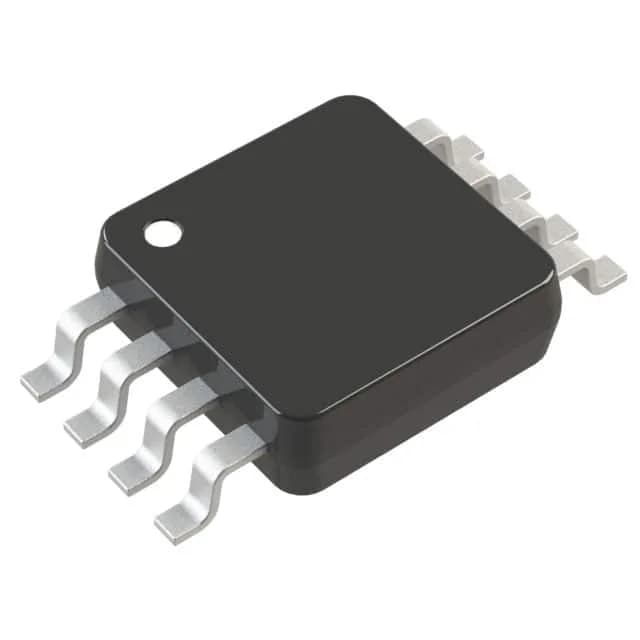
Precision current sense in an 8-MSOP package
Its 3 µV typical input offset voltage allows accurate sensing across a small shunt drop, which keeps power dissipation low in the sense element. The part operates from a 4 V to 60 V supply span, covering common industrial and telecom bus voltages like 24 V and 48 V. Gain bandwidth product is 200 kHz, sufficient for DC and low-frequency current monitoring in motor drives, power supplies, and battery management systems. Input bias current is 60 pA, so the shunt resistor value can be sized without worrying about bias-induced errors. The 420 µA supply current suits always-on monitoring where the amplifier stays powered continuously.
Where the 3 µV offset and 60 V supply matter
The 3 µV input offset is the spec that determines how small a shunt voltage you can resolve. With a 10 mΩ shunt carrying 1 A, the drop is 10 mV — the offset contributes only 0.03% error before any gain-stage drift. That makes this part a fit for precision current measurement where you want to minimize the shunt's I²R loss. The 60 V maximum supply span means the amplifier can monitor the high-side of a 48 V rail directly, without a level shifter or external divider. The output can swing to within a few hundred millivolts of the rails, limited by the 1 mA output current capability. For a design targeting 24 V industrial controls or 48 V telecom rectifiers, the supply range alone avoids a secondary regulator.
Temperature range and package fit
The part ships in Tube form, which is typical for prototype and low-volume builds; production quantities are usually ordered on tape and reel through distribution.
Lifecycle and sourcing posture
It is ROHS3 compliant, which clears EU and most global regulatory requirements without an exemption.