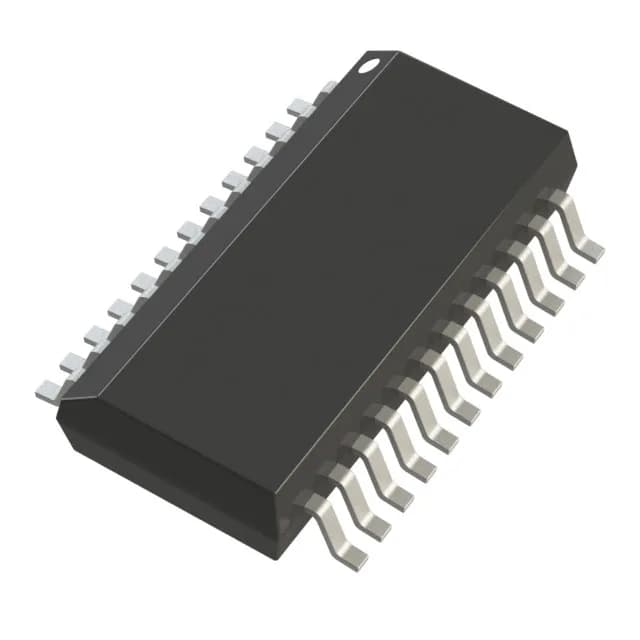
Dual-phase boost/SEPIC controller for high-power density designs
The LTC3862IGN#TRPBF is a dual-phase current-mode boost and SEPIC controller from Analog Devices, designed for applications requiring high step-up ratios or non-inverting buck-boost capability. It drives two external N-channel MOSFETs in a 2-phase configuration, which reduces input and output ripple current and spreads the thermal dissipation across the power stage. The controller operates from a 4V to 36V supply rail, making it suitable for 5V, 12V, and 24V bus architectures common in industrial, automotive, and telecom equipment. Switching frequency is programmable from 75kHz to 500kHz via a single resistor, and the part supports external clock synchronization for noise-sensitive multi-rail systems. The 96% maximum duty cycle allows high boost ratios without pulse-skipping, critical when generating a 48V rail from a 12V input or a 24V rail from a 5V input. Output configuration is positive, and the controller does not include synchronous rectification, so the external diode's forward voltage and recovery time factor into the efficiency budget. Control features include enable, frequency control, phase control, and soft start, giving the designer flexibility to sequence rails, spread EMI, and limit inrush current at power-up. The operating junction temperature range of -40°C to 125°C covers industrial and automotive under-hood environments, though the part is not listed as AEC-Q100 qualified in this evidence.
Package and footprint considerations
No exposed thermal pad is present on the SSOP-24 package, so thermal management relies on copper pour area and airflow. For continuous operation near the 125°C junction limit, ensure adequate PCB heatsinking on the drain pads of the external MOSFETs rather than relying on the controller package alone.
Switching frequency and external component selection
The 75kHz to 500kHz switching range lets the designer trade off inductor size against switching losses. At the low end, 75kHz suits designs prioritizing efficiency and thermal performance, such as high-current SEPIC converters in battery-powered equipment. At the high end, 500kHz shrinks the magnetics for space-constrained boards but increases gate-drive losses and may require faster external MOSFETs and diodes. The clock synchronization input allows multiple LTC3862 controllers or other converters to run at the same frequency, simplifying EMI filter design. The 96% maximum duty cycle enables high step-up ratios.
Lifecycle and sourcing
The LTC3862IGN#TRPBF is listed as Active in the manufacturer's lifecycle status, with ROHS3 compliance.