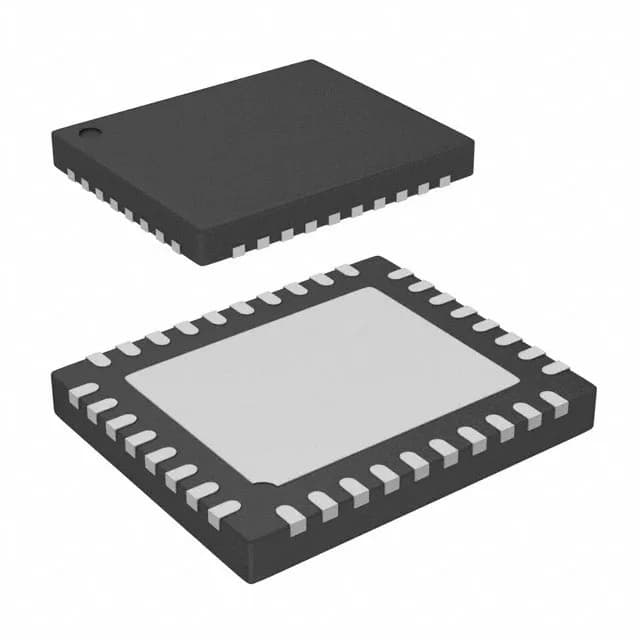
Analog Devices LTC3774IUHE#PBF — Discrete Semiconductors

LTC3774IUHE#PBF PolyPhase Buck Controller, 150kHz-1.2MHz

MPNLTC3774IUHE#PBF
End of Life

Analog Devices LTC3774IUHE#PBF, PolyPhase series, Step-Down Buck PWM Controller, 2 Outputs, 2 Phases, 150kHz to 1.2MHz, 4.5V to 38V Supply, -40°C to 125°C, 36-QFN (5x6) Package, Tube.

$9.64Ref. price · indicative, final on quote
Packaging36-WFQFN Exposed Pad
StockContact for availability
MOQ1 pcs
  • 100% new & originalTraceable channels only — no refurbs, no pulls, no remarked parts.
  • Date & lot codes on quoteStated per line before you commit; label photos on request.
  • MSL-compliant ESD packingMoisture-sealed bags with indicator cards; reels photo-verified.
  • PayPal buyer protectionPay by T/T, PayPal or Payoneer — card payments covered end to end.

Specifications

LTC3774IUHE#PBF Technical Specifications
ParameterValue
SeriesPolyPhase®
Output typePWM Signal
Mounting typeSurface Mount
Voltage - supply (Vcc (Vdd))4.5V ~ 38V
Frequency150kHz ~ 1.2MHz
Number of outputs2
Output phases2
Duty cycle98%
Operating temperature-40°C ~ 125°C (TJ)
PackageTube
FunctionStep-Down
TopologyBuck
Clock syncNo
Case36-WFQFN Exposed Pad
Control featuresCurrent Limit, Enable, Frequency Control, Power Good, Soft Start, Tracking
Output configurationPositive
Synchronous rectifierNo

Product details

Dual-phase buck controller for high-current POL rails

The LTC3774IUHE#PBF is a dual-output, dual-phase step-down PWM controller from the PolyPhase series, designed for non-isolated point-of-load regulators that need to share current across two interleaved phases. It drives external N-channel MOSFETs and generates a PWM signal for each phase, reducing input ripple and allowing smaller input capacitors compared to a single-phase design. The input supply range of 4.5 V to 38 V covers common intermediate bus voltages in telecom, industrial, and automotive systems. The switching frequency is programmable from 150 kHz to 1.2 MHz, letting the designer trade efficiency against inductor size. Control features include current limit, enable, frequency control, power good, soft start, and output tracking — enough to sequence multiple rails without an external supervisor.

What the ratings mean for the power stage

The 98% maximum duty cycle keeps the high-side FET on nearly the whole cycle, useful when the input voltage is only slightly above the output target. The -40°C to 125°C junction temperature rating covers both industrial enclosures and under-hood automotive environments. No synchronous rectifier is built in; the external MOSFETs handle the low-side switching, so the designer chooses the FETs for the target efficiency and thermal budget. The 36-QFN (5x6) package with exposed pad requires a thermal via pattern under the part to pull heat into the PCB copper plane. The pad is the main thermal path — a layout review is worth the time.

Lifecycle and compliance

The LTC3774IUHE#PBF is listed as Active with ROHS3 compliance.

Frequently asked questions

Is the LTC3774IUHE#PBF RoHS compliant?

Yes, the LTC3774IUHE#PBF is ROHS3 compliant.

What is the LTC3774IUHE#PBF datasheet?

The datasheet for the LTC3774IUHE#PBF is published by Analog Devices and covers the full electrical characteristics, application circuits, and layout guidelines for the PolyPhase dual-phase buck controller. Request a copy with your RFQ.

What is the closest functional alternative to the LTC3774IUHE#PBF?

Within the same PolyPhase family, the LTC3890EUH#PBF is a close functional peer: it also drives two phases, operates from 4.0 V to 60 V (wider input range), includes synchronous rectification, and adds phase control. The LTC3890 is a better fit if you need higher input voltage or synchronous operation. The LTC3774 lacks synchronous rectification, which simplifies the gate drive but shifts the low-side loss to an external Schottky.

Can the LTC3774IUHE#PBF be used in automotive applications?

The -40°C to 125°C junction temperature rating is suitable for under-hood and cabin automotive environments, but the part does not carry an explicit AEC-Q100 qualification in the listing. Verify with the manufacturer for automotive-specific reliability requirements.