16 channels, 16 bits, multiplying architecture — what that means for your system
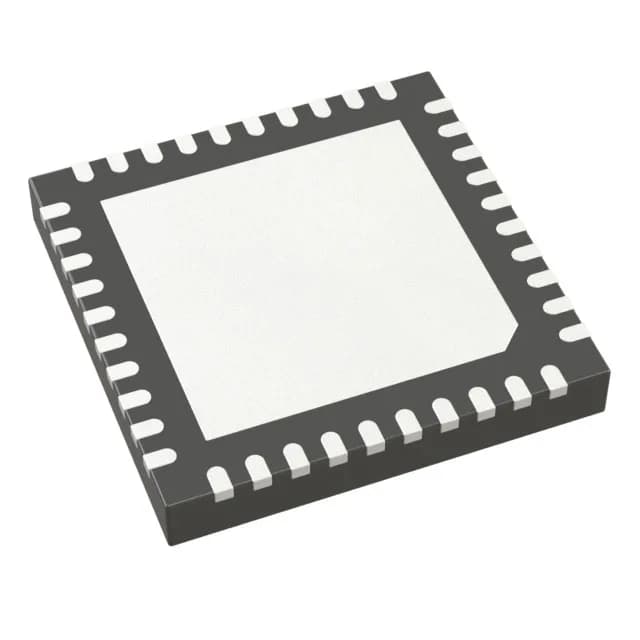
The LTC2688HUJ-16#PBF from Analog Devices packs 16 independent 16-bit digital-to-analog converters into a single 40-QFN package, each with a buffered voltage output. That is 16 separate analog outputs you can update independently over a single SPI bus — no external muxing or sample-and-hold needed. The multiplying DAC architecture means the output is the product of the digital code and an external reference voltage, so you can scale the full-scale range dynamically by changing the reference. This is useful in programmable power supplies, automated test equipment, or any system where one DAC channel per control loop is the rule.
Accuracy and settling — the specs that matter for closed-loop control
Integral nonlinearity is ±3 LSB maximum, differential nonlinearity ±1 LSB maximum. That ±1 LSB DNL guarantees monotonicity — every code step produces a positive voltage increment.