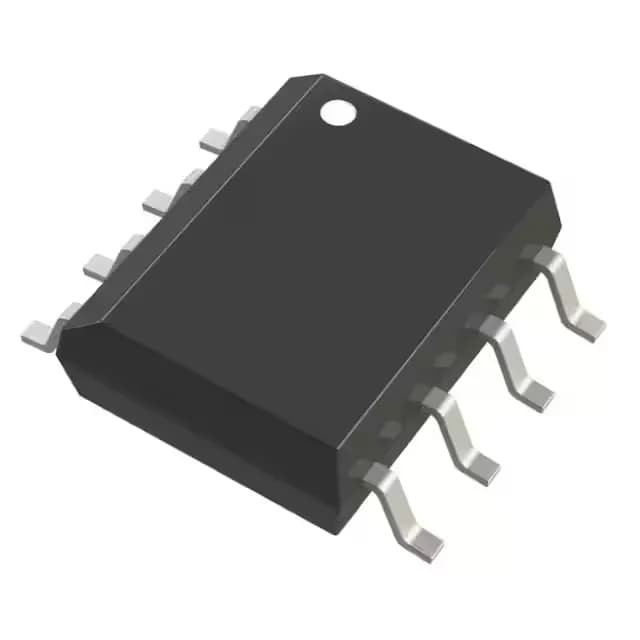
Precision zero-drift amplifier in an 8-SOIC — what the ratings mean for your signal chain
The LTC2050HVCS8#TRPBF is a single-channel zero-drift operational amplifier from Analog Devices, built for applications that demand low offset drift and high DC precision over time and temperature. Its key specs — 0.5 µV input offset voltage, 3 MHz gain-bandwidth product, and a 2V/µs slew rate — make it a natural fit for precision instrumentation, weigh scales, thermocouple amplifiers, and medical front-ends where the signal is small and the noise floor must stay low. The rail-to-rail output stage lets it swing close to the supply rails, preserving dynamic range in low-voltage single-supply designs running from 2.7 V up to 11 V.
0.5 µV offset — why it matters for a zero-drift amp
Zero-drift amplifiers use chopping or auto-zero techniques to cancel their own offset. The 0.5 µV figure here is the residual offset after that cancellation — it determines the smallest DC signal you can resolve without calibration. For a thermocouple output in the tens of microvolts per degree, that offset translates to a fraction of a degree of error. The 25 pA input bias current keeps the offset from growing when source impedance is high, which matters for photodiode or high-impedance sensor interfaces.
Supply range and output swing — single-supply design headroom
The part operates from 2.7 V to 11 V. Rail-to-rail output swings close to the supply rails. Supply current is 1 mA.