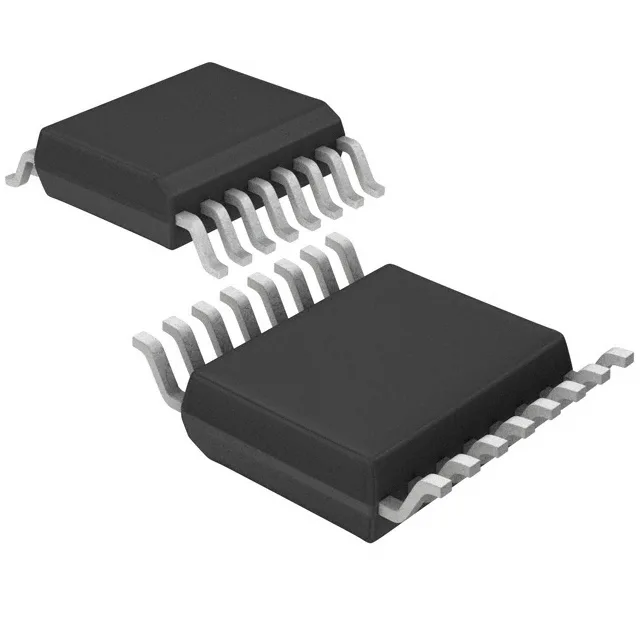
Analog Devices LTC1628IG-SYNC#PBF — Analog & Data Acquisition

LTC1628IG-SYNC#PBF Dual Buck Controller, 220kHz, 16-SSOP

MPNLTC1628IG-SYNC#PBF
End of Life

Analog Devices LTC1628IG-SYNC#PBF dual synchronous buck controller, step-down, 2-phase, 220kHz, 99.4% max duty, 3.5-30V supply, 16-SSOP, tube.

$15.57Ref. price · indicative, final on quote
Packaging16-SSOP (0.209", 5.30mm Width)
StockContact for availability
Lead timeIn Stock wk
MOQ1 pcs
  • 100% new & originalTraceable channels only — no refurbs, no pulls, no remarked parts.
  • Date & lot codes on quoteStated per line before you commit; label photos on request.
  • MSL-compliant ESD packingMoisture-sealed bags with indicator cards; reels photo-verified.
  • PayPal buyer protectionPay by T/T, PayPal or Payoneer — card payments covered end to end.

Specifications

LTC1628IG-SYNC#PBF Technical Specifications
ParameterValue
Output typeTransistor Driver
Mounting typeSurface Mount
Voltage - supply (Vcc (Vdd))3.5V ~ 30V
Frequency220kHz
Number of outputs2
Output phases2
Duty cycle99.4%
Operating temperature-40°C ~ 85°C (TA)
PackageTube
FunctionStep-Down
TopologyBuck
Clock syncNo
Case16-SSOP (0.209\", 5.30mm Width)
Control featuresEnable, Frequency Control, Power Good, Soft Start
Output configurationPositive
Synchronous rectifierYes

Product details

Dual-phase synchronous buck controller — key parametrics for the BOM

The LTC1628IG-SYNC#PBF is a dual-output, 2-phase synchronous buck controller from Analog Devices (Linear Technology heritage), operating at a fixed 220 kHz switching frequency and capable of up to 99.4% duty cycle. It drives external N-channel MOSFETs from a 3.5 V to 30 V supply rail, making it suitable for intermediate bus conversion or point-of-load regulation in telecom, industrial, and computing power chains.

What the specs mean for the power-stage decision

The 99.4% maximum duty cycle means the controller can run the top FET nearly fully on — useful when the input voltage is only marginally above the output target, as in a 3.3 V rail from a 3.5 V input. The 220 kHz switching frequency is on the lower side for a modern buck controller; it keeps switching losses in the external FETs modest, but requires larger output inductance and capacitance than a 500 kHz+ part. The trade-off is worth it when efficiency at light load matters more than board area. Synchronous rectification is built in — the controller drives both the high-side and low-side N-channel FETs, eliminating the Schottky catch diode's forward drop. This recovers the conduction loss that would otherwise be dissipated as heat in the diode, improving full-load efficiency by typically 3-5% over an asynchronous buck at the same output current. The control features include Enable, Frequency Control, Power Good, and Soft Start. The Frequency Control pin allows synchronizing to an external clock or setting the oscillator frequency with a resistor — useful when the switcher must avoid a sensitive band in the downstream load's noise spectrum. Soft Start ramps the output voltage on startup, preventing inrush current from tripping the upstream supply.

Package, temperature grade, and compliance

The supplier device package is 16-SSOP; the tube delivery is suitable for hand assembly or low-volume pick-and-place.

Frequently asked questions

What is the closest functional alternative to LTC1628IG-SYNC#PBF?

The LTC3728EUH#PBF is a near-parametric peer: also a dual synchronous buck controller in a 16-SSOP package, but it switches at 260 kHz instead of 220 kHz and lacks the Frequency Control pin. The LTC3850EGN-1#PBF adds Current Limit and Tracking features, runs at 250 kHz, and has a 97.2% max duty cycle vs 99.4%. Neither is a drop-in replacement — the pinouts differ — but either can serve the same two-phase buck function with a board spin.

What compliance documentation is available for LTC1628IG-SYNC#PBF?

The part is RoHS3 compliant (ROHS3 per). Analog Devices provides a datasheet with full electrical specifications, typical application circuits, and package outline drawing. No UL or IEC certification is listed for this IC — those standards apply to end equipment, not the controller itself.