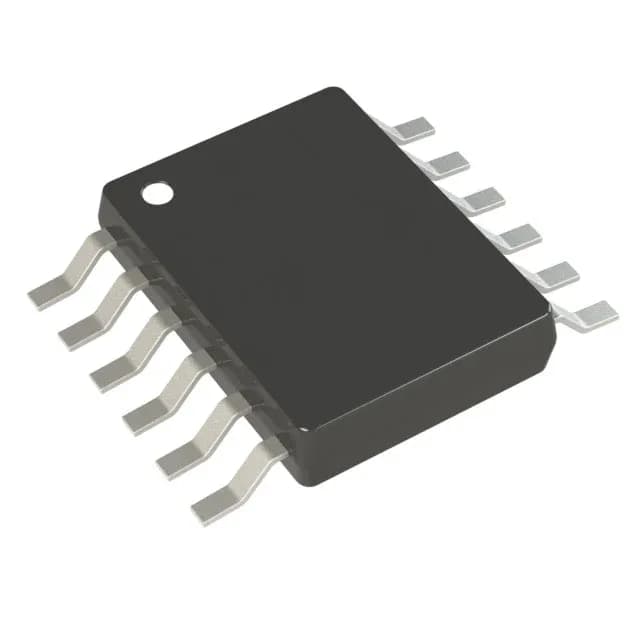
60V input, low-IQ controller for boost, flyback, and SEPIC designs
The Analog Devices LT8357EMSE#PBF is a current-mode DC/DC controller that handles step-up and step-up/step-down conversion across boost, flyback, and SEPIC topologies. Its 3V to 60V supply range makes it a natural fit for 12V/24V/48V automotive, industrial, and telecom rails where input transients can spike well above the nominal bus. The switching frequency is programmable from 100kHz to 2MHz, letting you optimise the magnetics for efficiency or board area — a 2MHz design shrinks the inductor and capacitor values, while 100kHz cuts switching losses in a thermally constrained enclosure. A single transistor driver output drives an external N-channel MOSFET; there is no synchronous rectifier, which keeps the BOM simple but means the Schottky catch diode dissipates the recirculation power. The controller includes current limit, enable, frequency control, power-good flag, and soft start — enough housekeeping to sequence a multi-rail system without a separate supervisor.
Package and thermal: 12-MSOP with exposed pad
The LT8357EMSE#PBF comes in a 12-lead TSSOP package with an exposed pad, supplier device code 12-MSOP-EP. The exposed pad is the primary thermal path — it must be soldered to a copper plane on the PCB. For a controller that drives an external FET, the die dissipation is modest, but in a 2MHz flyback running at high duty cycle the pad still needs a via-stitched ground island to keep junction temperature below the 125°C limit. The tube is the standard shipping medium; if your pick-and-place line prefers tape-and-reel, check the reel option suffix.
Lifecycle and sourcing posture
The LT8357EMSE#PBF carries an Active product status and is ROHS3 compliant. For BOM planning, this means no last-time-buy pressure and no forced redesign horizon. If you need a second-source option for supply resilience, the closest functional match in the same family is the LTC3786IUD#PBF — it shares the same boost/flyback/SEPIC topology, transistor driver output, and control features, but adds synchronous rectification and operates from a 4.5V minimum supply.