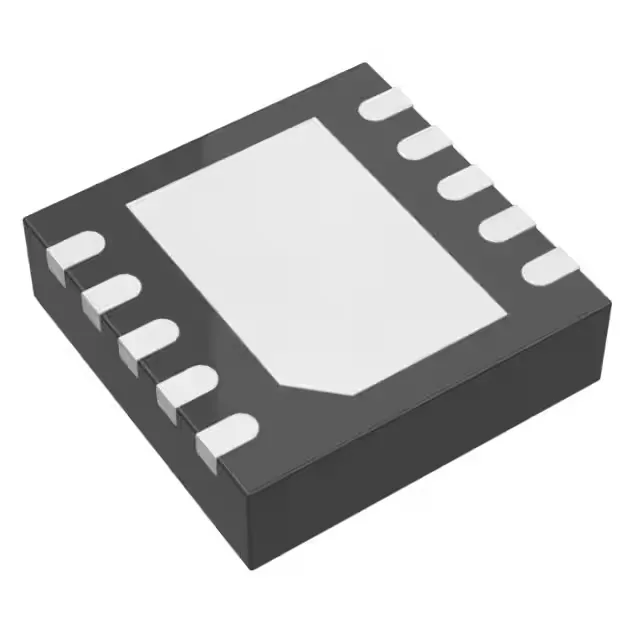
500 mA LDO with 85 dB PSRR — the noise-rejection anchor
The LT3065HDD#PBF is an adjustable positive LDO from Analog Devices, delivering 500 mA output with a PSRR of 85 dB at 120 Hz — that 85 dB figure is the rejection of rectified line ripple, so a 1 Vpp ripple on the input at 120 Hz comes out as roughly 56 µVpp on the output. For a precision analog rail feeding an ADC or a sensor front-end, that keeps the supply noise floor well below the signal chain's own noise. Input voltage range extends to 45 V, which covers 24 V industrial supplies with margin for transients up to that ceiling.
Dropout, quiescent, and protection — the real-world trade-offs
Maximum dropout is 0.51 V at the full 500 mA load — that means the input must stay at least 0.51 V above the output voltage across temperature and load. If you're regulating 3.3 V from a 5 V rail, that's fine; if you're trying to get 3.3 V from a 3.6 V lithium cell near end-of-discharge, the headroom disappears. Plan the input rail accordingly. Quiescent current is 110 µA typical — not the lowest in class, but reasonable for an always-on rail in a system that isn't battery-sleeping for months. The 25 mA maximum supply current includes the driver and reference; it's not a concern at 500 mA output but matters if the part is lightly loaded and you're budgeting the total system Iq. Built-in protections cover overcurrent, overtemperature, and reverse polarity — the reverse polarity clamp is a real differentiator for field power supplies where a user might reverse the input leads. The control features (current limit, enable, power good, soft start) give the system designer a clean power-up sequence and fault reporting.
Package and thermal — the 10-DFN exposed pad
The 150°C maximum junction temperature gives headroom, but only if the board copper sinks the heat. Surface-mount only — no through-hole variant. The tube packaging (50 per tube typical) is fine for prototype builds; production volumes usually shift to tape-and-reel, so confirm the packaging code if ordering for a pick-and-place line.
The 150°C junction rating is the absolute limit; derate power dissipation above 125°C ambient per the datasheet thermal resistance curves.