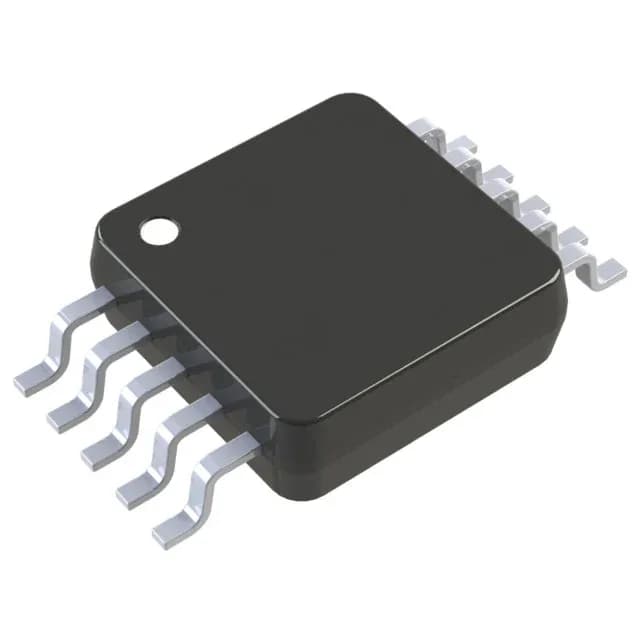
Analog Devices LT1991CMS#PBF — Logic ICs

LT1991CMS#PBF Programmable Gain Amplifier, 560 kHz, 10-MSOP

MPNLT1991CMS#PBF
End of Life

Analog Devices LT1991CMS#PBF, Programmable Gain Amplifier, 1 Circuit, Rail-to-Rail Output, 560 kHz Gain Bandwidth, 0.12 V/µs Slew Rate, 2.7 V to 36 V Supply, 10-MSOP, Tube.

$4.58Ref. price · indicative, final on quote
Packaging10-TFSOP, 10-MSOP (0.118", 3.00mm Width)
StockContact for availability
MOQ1 pcs
  • 100% new & originalTraceable channels only — no refurbs, no pulls, no remarked parts.
  • Date & lot codes on quoteStated per line before you commit; label photos on request.
  • MSL-compliant ESD packingMoisture-sealed bags with indicator cards; reels photo-verified.
  • PayPal buyer protectionPay by T/T, PayPal or Payoneer — card payments covered end to end.

Specifications

LT1991CMS#PBF Technical Specifications
ParameterValue
Output typeRail-to-Rail
Mounting typeSurface Mount
Amplifier typeProgrammable Gain
Voltage - input offset25 µV
Voltage - supply span2.7 V
Current - supply130µA
Current - input bias2.5 nA
Current - output (Channel)21 mA
Operating temperature0°C ~ 70°C
-3db bandwidth110 kHz
Gain bandwidth product560 kHz
PackageTube
Slew rate0.12V/µs
Case10-TFSOP, 10-MSOP (0.118\", 3.00mm Width)
Number of circuits1

Product details

Programmable gain in a 10-MSOP — what the LT1991CMS#PBF brings to the board

It combines a precision op-amp core with a resistor network that sets the gain through pin-strapping — no external resistors needed. Key characteristics include a 25 µV input offset, 2.5 nA input bias current, and a gain-bandwidth product of 560 kHz.

The 560 kHz gain-bandwidth product sets the usable frequency range at a given closed-loop gain. At a gain of 100, the bandwidth drops to roughly 5.6 kHz — fine for DC or low-frequency sensor outputs (thermocouples, strain gauges, bridge circuits), but not for audio or fast data acquisition. The 0.12 V/µs slew rate limits large-signal response: a 10 V output step slews in about 83 µs. For applications that need to track fast transients or drive high-frequency signals, a wider-bandwidth PGA or a dedicated op-amp would be a better fit. The -3 dB bandwidth of 110 kHz confirms the part is optimised for precision, not speed.

It is ROHS3 compliant.

Frequently asked questions

What is the LT1991CMS#PBF gain range and how do I set it?

The LT1991CMS#PBF is a programmable gain amplifier whose gain is set by pin-strapping internal resistor networks — no external resistors. The datasheet provides gain codes for common values; the exact gain range depends on the pin configuration chosen. For a given application, refer to the manufacturer's datasheet for the gain-setting table.

Can LT1991CMS#PBF be used in single supply applications?

Yes. The supply voltage range of 2.7 V to 36 V covers single-supply rails like 3.3 V, 5 V, and 12 V. The rail-to-rail output allows the signal to swing close to the supply rails, which is important for driving an ADC or feeding a microcontroller input without level shifting.

Does LT1991CMS#PBF have a pin-compatible replacement or equivalent?

The AD623BRZ is a single-supply instrumentation amplifier in an 8-MSOP package, but it is not pin-compatible with the 10-MSOP LT1991CMS#PBF. The ADA4096-2 is a dual general-purpose op-amp with a different pinout and function. For a functional equivalent, evaluate parts with similar gain-bandwidth, offset, and supply range in the same package footprint.