Negative rail LDO for precision analog and industrial supplies
The Analog Devices LT1964IS5-BYP#TRMPBF is a negative-output, adjustable low-dropout linear regulator delivering up to 200 mA. It is designed for generating clean negative rails in dual-supply analog systems, industrial sensor interfaces, and audio circuits where power-supply rejection matters. The output is adjustable from -1.22 V down to -20 V using an external resistor divider, matching the maximum input voltage rating of -20 V. A 54 dB PSRR at 120 Hz keeps 60 Hz and its harmonics from coupling into sensitive analog stages — the kind of rejection that matters when a switching pre-regulator feeds the negative rail and you need the op-amp's noise floor to stay low.
Dropout and headroom for the negative rail
Maximum dropout is specified at 0.49 V with the full 200 mA load. That means a -5 V input rail can hold a -4.5 V output through a cold-crank or brownout condition — useful when the negative rail comes from a charge pump or a secondary winding that droops under load. The 200 mA output current is the ceiling for a single regulator; if the load exceeds that, the over-current protection engages. The enable pin lets the regulator be sequenced or shut down for power-save modes.
Protection features that matter on a negative rail
Reverse polarity protection is built in — a genuine differentiator for negative-rail designs. If the input supply is accidentally reversed, the regulator limits damage rather than letting the silicon conduct. Over-temperature and over-current protection round out the set, so the part can survive a sustained short on the output without immediate failure.
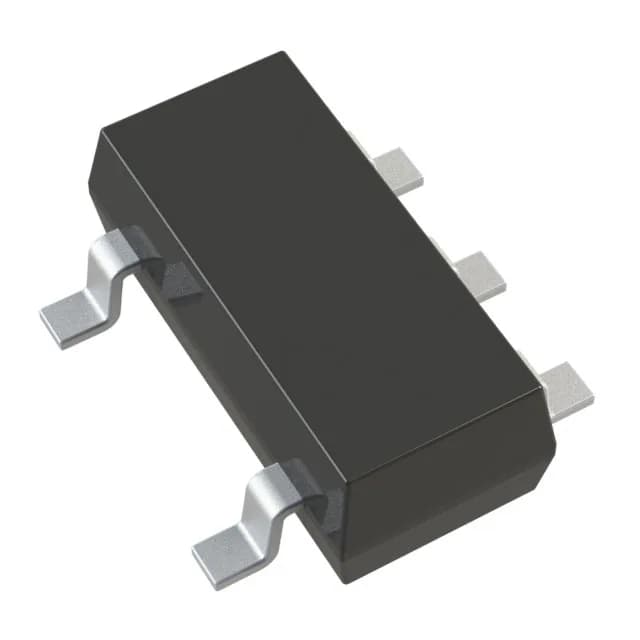
Package and footprint: TSOT-23-5
The LT1964IS5-BYP#TRMPBF is supplied in a TSOT-23-5 package, a thin SOT-23 variant with a 0.95 mm pitch. The 'BYP' suffix indicates the bypass pin variant — a noise-reduction capacitor on the BYP pin can lower output noise further, per the datasheet's typical application circuit. No special bake-out is needed if the moisture barrier bag is intact; standard MSL 1 handling applies.