1 µA per channel — the design trade-off that defines this part
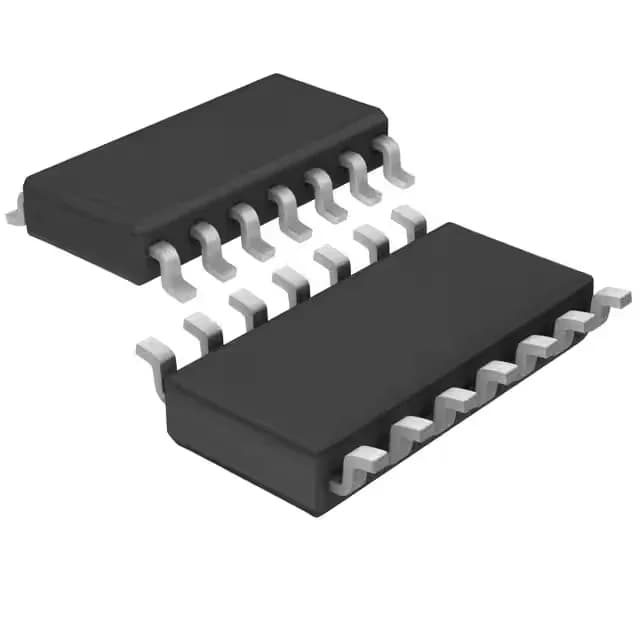
The LT1496CS#PBF is a quad general-purpose operational amplifier from Analog Devices (LT® series) built around a single design priority: minimising supply current. Each of its four amplifiers draws 1 µA from the rail, making the complete device a 4 µA quiescent load. That 2.7 kHz gain-bandwidth product tells you the bandwidth budget — this is a DC and near-DC signal chain part, not an audio or control-loop amplifier. The trade-off is deliberate: if your sensor bridge, thermocouple, or battery-monitor circuit needs to run for years on a coin cell, this is the class of op-amp you spec. The 14-SOIC package (3.90 mm width) fits standard four-channel op-amp footprints.
Supply range and output swing — where the flexibility is
The supply span covers 2.2 V minimum to 36 V maximum, which means the same part works in a 2.2 V battery system and a 36 V industrial rail without a secondary regulator. Rail-to-rail output swing preserves signal headroom at low supply voltages — at 2.2 V the output can swing close to both rails, which matters when the ADC reference is the same rail. Input offset voltage is 200 µV typical, and input bias current is 250 pA, both reasonable for a micropower amplifier but not precision-instrumentation grade.
Temperature grade — commercial only, plan accordingly
This is a commercial-grade part. If your BOM calls for industrial temperature, look at the LT1496I or similar industrial-temp variants in the same family.