120 kHz GBW and 60 µA per channel — the power-versus-speed trade-off
The LT1466LCS8#PBF: At 120 kHz gain bandwidth, this op-amp is squarely in the micropower category. It will not handle audio, high-speed ADC driving, or fast control loops. What it does well is DC-accurate amplification of slow signals — thermocouple outputs, strain-gauge bridges, photodiode currents with modest bandwidth — where keeping the total supply draw under 120 µA for both channels is the priority. The 0.04 V/µs slew rate confirms the same: expect clean settling on signals below a few kilohertz. If your design needs more speed, the ADA4096-2 (786 kHz) or ADA4500-2 (10 MHz) are faster alternatives, though they draw more supply current.
Rail-to-rail output, not rail-to-rail input
The LT1466LCS8#PBF provides a rail-to-rail output stage, which means the output can swing within millivolts of either supply rail — important for maximizing dynamic range at low supply voltages. For designs requiring true rail-to-rail input, the ADA4500-2 offers that capability at a higher supply current.
Package and rework considerations for the 8-SOIC
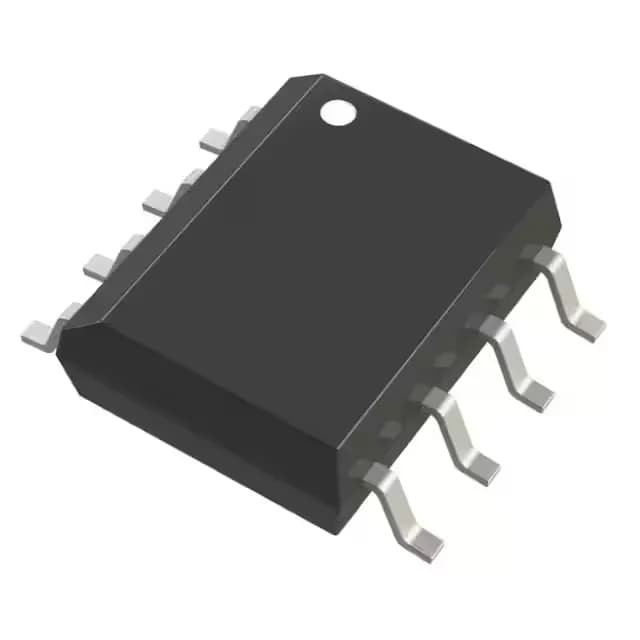
The 8-SOIC package has visible leads for hand soldering or hot-air rework. No exposed thermal pad simplifies the PCB layout.