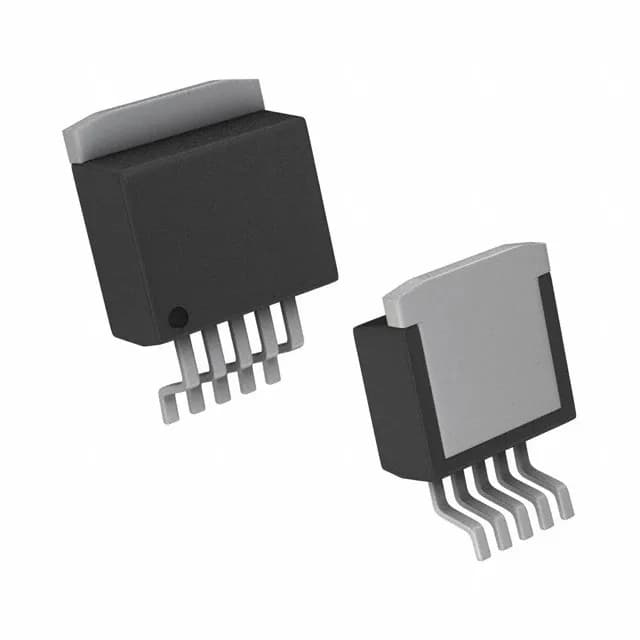
Analog Devices LT1076IQ#PBF — Analog & Data Acquisition

LT1076IQ#PBF Analog Devices Switching Regulator, 2A, 100kHz

MPNLT1076IQ#PBF
End of Life

Analog Devices LT1076IQ#PBF, adjustable switching regulator, 2A switch, 100kHz, buck/boost/flyback topology, 8V to 45V input, -40°C to 85°C, TO-263-6 (D²Pak), Tube.

$13.83Ref. price · indicative, final on quote
PackagingTO-263-6, D²Pak (5 Leads + Tab), TO-263BA
StockContact for availability
MOQ1 pcs
  • 100% new & originalTraceable channels only — no refurbs, no pulls, no remarked parts.
  • Date & lot codes on quoteStated per line before you commit; label photos on request.
  • MSL-compliant ESD packingMoisture-sealed bags with indicator cards; reels photo-verified.
  • PayPal buyer protectionPay by T/T, PayPal or Payoneer — card payments covered end to end.

Specifications

LT1076IQ#PBF Technical Specifications
ParameterValue
Output typeAdjustable
Mounting typeSurface Mount
Voltage - input45V
Voltage - output35V
Voltage - output (Min (Fixed))2.5V
Current - output2A (Switch)
Frequency100kHz
Number of outputs1
Operating temperature-40°C ~ 85°C (TA)
PackageTube
FunctionStep-Up, Step-Down, Step-Up/Step-Down
TopologyBuck, Boost, Flyback
CaseTO-263-6, D²Pak (5 Leads + Tab), TO-263BA
Output configurationPositive or Negative
Synchronous rectifierNo

Product details

What the LT1076IQ#PBF is and where it fits

The Analog Devices LT1076IQ#PBF is a monolithic switching regulator that can be configured as a step-down (buck), step-up (boost), or flyback converter, delivering up to 2A at the switch. It operates from an 8V to 45V input rail and produces an adjustable output from 2.5V up to 35V. The 100kHz switching frequency is a deliberate choice — fast enough to keep inductor size reasonable for 2A designs, slow enough to avoid the tight layout and snubbing that 500kHz+ parts demand. The TO-263-6 (D²Pak) package with exposed tab handles the thermal load of continuous 2A switching without heroic heatsinking, provided the tab is soldered to a copper plane. This part is aimed at industrial power supplies, battery chargers, distributed power architectures, and isolated flyback rails where the input voltage is a regulated bus or a multi-cell battery stack.

2A switch current — what it means for your rail

The 2A switch current rating is the peak current the internal power switch can handle cycle-by-cycle. In a buck converter, that translates to about 1.2A to 1.5A continuous output at 12V in / 5V out, depending on inductor ripple and duty cycle. In a flyback, the 2A peak limits the output power to roughly 10W to 15W at typical telecom voltages. If your load demands more than that, you step up to an external-switch controller or a higher-current monolithic part like the LT1370 (6A switch). The 2A rating also sets the input capacitor ripple current requirement — plan for at least 1.5A RMS rating on the input cap.

100kHz switching — layout and inductor choices

The 100kHz switching period allows use of standard ferrite core inductors without saturation concerns.

Package and mounting — TO-263-6 (D²Pak)

The TO-263-6 (D²Pak) package has five leads plus the tab, which is the switch node and primary thermal path.

Lifecycle and sourcing posture

The LT1076IQ#PBF carries an Active product status and is ROHS3 compliant. That means it remains a viable choice for both new designs and production replenishment without near-term obsolescence risk.

Frequently asked questions

What are the equivalent or alternative parts to LT1076IQ#PBF?

For a lower-current (1.5A) alternative with a wider temperature range, the LT1111IS8#PBF operates from 2V input and supports buck/boost topologies. For higher current (6A), the LT1370HVCR#PBF runs at 500kHz and covers buck/boost/Cuk/flyback/SEPIC topologies. Neither is a direct pin-for-pin replacement — package and pinout differ — but they cover the same function space.

How to use LT1076IQ#PBF in a flyback converter?

Configure the part as a flyback by connecting the transformer primary between the switch pin and the input rail, with the secondary rectified to the output. The 2A switch current limits output power to roughly 10W–15W at typical telecom voltages. Use a Schottky diode on the secondary and a 33 µH to 100 µH primary inductance. The 100kHz switching frequency suits standard ferrite cores.