What this CMOS 555 timer brings to the board
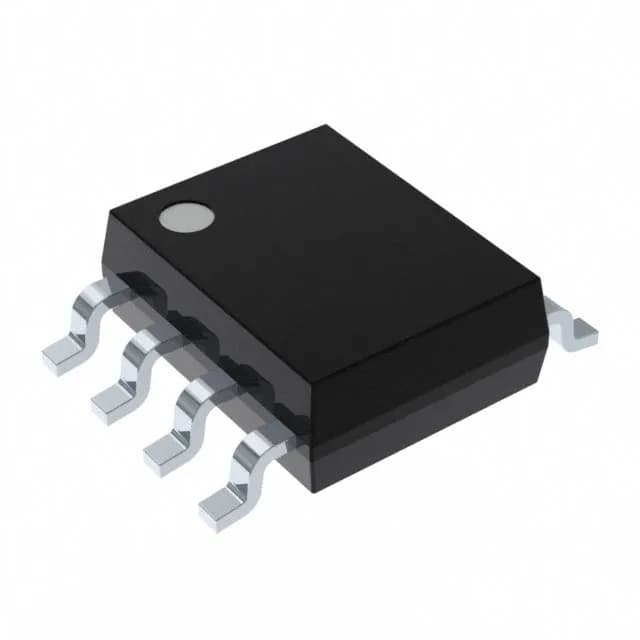
The Maxim Integrated ICM7555ISA+T is a single 555-type timer/oscillator built on a CMOS process, which drops the supply current to 30 µA — roughly two orders of magnitude below the classic bipolar NE555's several-milliamp quiescent. That makes it the part you reach for when the timing function has to run continuously from a battery or a lightly loaded regulator rail without burning the power budget. It oscillates up to 500 kHz and operates from a 2V to 16.5V supply, so it sits comfortably alongside 3.3V logic, 5V TTL systems, or a 12V industrial rail without a separate regulator. The 8-SOIC footprint is the standard surface-mount 555 layout, which simplifies a drop-in replacement on existing PCB designs that previously used a bipolar timer. Temperature range is -20°C to 85°C, which covers commercial and most indoor industrial environments but does not extend to automotive under-hood or extended outdoor telecom cabinets. For those, you would look at the -40°C to 125°C variants in the same family.
30 µA supply current — what it means for your power rail
The headline 30 µA supply current is the reason to pick this part over a standard 555. In a battery-powered sensor node that runs a timer-based wake-up cycle, that 30 µA is negligible against the MCU's sleep-mode draw. In a linear regulator design, it keeps the quiescent load on the pass transistor low enough that dropout voltage stays tight at light loads. Just confirm the output drive capability meets your load — CMOS 555 outputs source and sink less current than the bipolar version, typically 100 mA or less depending on supply voltage.
Active lifecycle — no LTB pressure on this BOM line
The ICM7555ISA+T carries an Active product status with ROHS3 compliance.
Pin-compatible alternatives in the 555 family
The ICM7555ISA+T is the surface-mount 8-SOIC variant of Maxim's CMOS 555 family. The through-hole equivalent is the ICM7555IPA (PDIP-8), which shares the same die and electrical specs but in a different package for prototyping or legacy through-hole boards. Both are active and ROHS3 compliant. For a direct CMOS replacement of the standard bipolar NE555, the ICM7555 series is pin-compatible — same 8-pin layout — but the output drive and supply current differ significantly, so check the load before swapping.