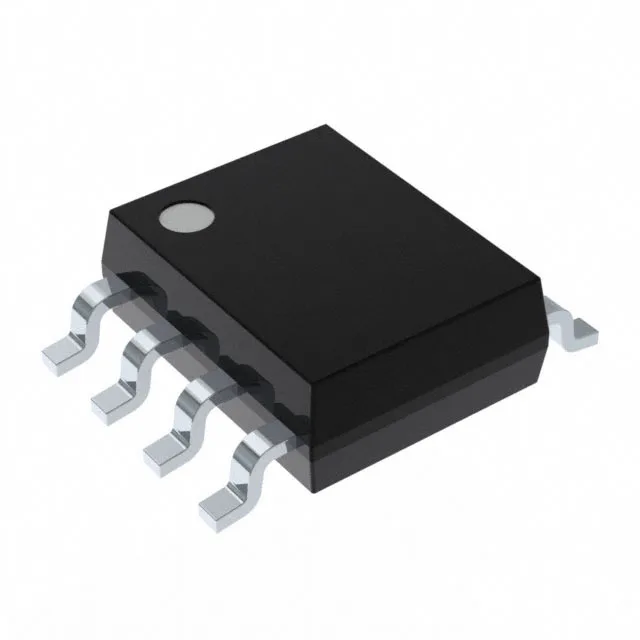
Device identity and supply posture
The ICM7555ISA+: No lead-time or stock-holding claim is made here — the RFQ is the binding step.
Rated for 500 kHz maximum oscillation frequency — this sets the upper timing boundary for monostable and astable configurations. For a 555-class part, 500 kHz is a practical ceiling; above it the internal comparator propagation delay and output rise time start to dominate the period, so the actual usable frequency in a closed-loop application is lower than the bare spec suggests. Supply current is 30 µA typical, which is the CMOS-grade quiescent draw of this variant — orders of magnitude lower than the bipolar NE555's ~10 mA. This matters for battery-powered or always-on timing circuits where the timer's own consumption must not dominate the sleep budget. The 2 V floor means it starts from a nearly depleted battery, though the output drive strength at the low end is reduced. Industrial temperature grade of -20°C to 85°C — this is the standard commercial-industrial band for indoor equipment, telecom shelters, and factory-floor enclosures. Not rated for -40°C cold-start or +125°C under-hood automotive environments.
The 1.27 mm lead pitch is standard for SOIC-8 and routes easily on two-layer boards — no via-in-pad or micro-via required. Supplied in tube packaging — not tape-and-reel. For automated pick-and-place, plan to transfer to a feeder-compatible carrier or order the tape-and-reel variant if available. The tube quantity is typically 50-100 units per tube, depending on the supplier's packing standard.