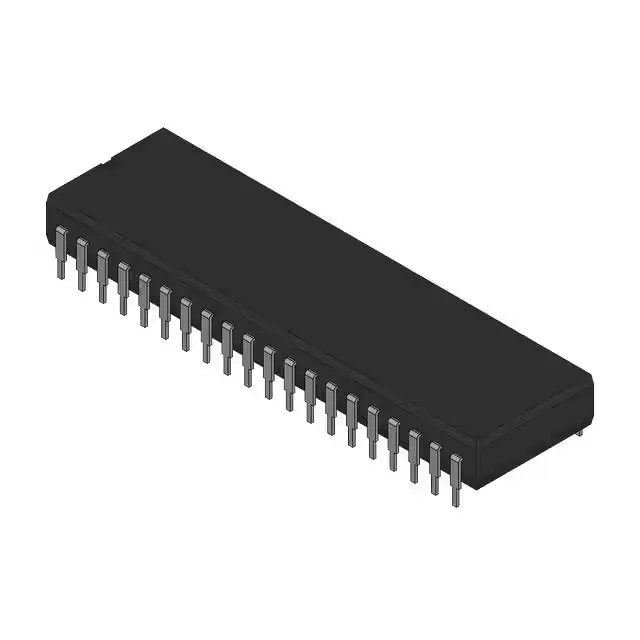
The Intersil ICM7211AMIJL is a CMOS LCD display decoder/driver that takes a 4-digit BCD input and drives a 4-digit 7-segment LCD panel directly. The 44-PLCC package (16.59x16.59 mm body) is a surface-mount J-lead package, so the board footprint is the 44-pin LCC land pattern.
Supply range and current — the power budget decision
The 3V to 6V supply range covers both a 3.6V lithium cell and a regulated 5V rail. At 10 µA supply current the driver adds negligible load to the regulator or battery, which is the reason this part gets specified over a microcontroller with a built-in LCD driver when the display is the only reason for the MCU. The low current also means no thermal concern in the PLCC package — the junction temperature stays close to ambient even in a sealed enclosure.
It is not specified for automotive under-hood or military extended-range applications. The 85°C upper limit is typical for a CMOS LCD driver in a PLCC package; if the enclosure sees sustained temperatures above 70°C, derate the supply voltage toward 3V to stay inside the safe operating area.
RoHS status — BOM constraint
The ICM7211AMIJL is marked RoHS non-compliant. This means the part contains lead (Pb) in the solder finish or package terminations, which is exempt under certain RoHS categories (e.g., high-reliability or industrial equipment) but will flag on a consumer-electronics BOM that requires full lead-free compliance. If your assembly line or end-market requires RoHS, you need a compliant variant or an alternative driver. The non-compliant status is a sourcing constraint, not a performance issue — the part functions identically to a RoHS version where one exists.
The official lifecycle status is Active, meaning Intersil (now Renesas) continues to manufacture this part. The active status also means the factory lead time is the standard semiconductor cycle — quoted at order time, not a spot-market premium.