The input bias current is just 1 pA, making it suitable for high-impedance signal conditioning — think photodiode amplifiers, pH probe buffers, or electrometer front ends. The supply can span from 2 V up to 16 V, so it runs off a single lithium cell or a split ±8 V rail.
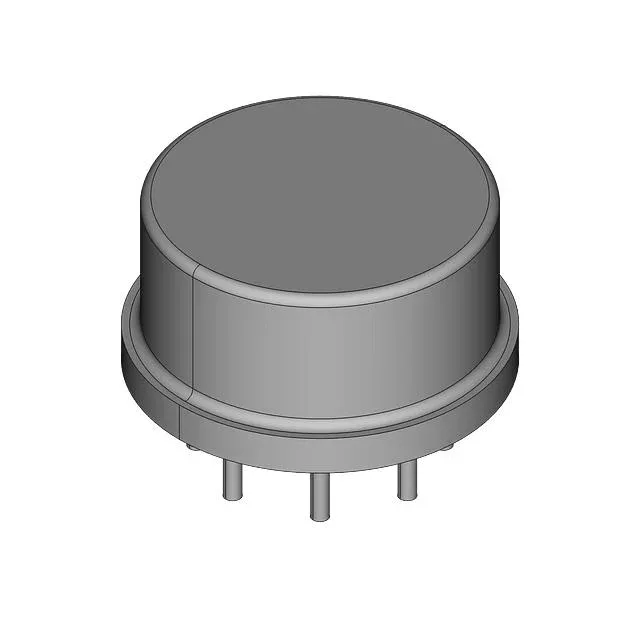
The TO-99-8 is a hermetic metal can with eight leads on a 0.2-inch bolt circle. It's a through-hole package, so you'll be hand-soldering or wave-soldering into a PCB with 0.1-inch pin spacing. The metal case provides decent shielding against radiated noise, which helps when you're amplifying microvolt-level signals. No exposed thermal pad here — heat dissipates through the leads and the case itself. Keep the supply bypass caps close to the can; a 0.1 µF ceramic from each rail to ground right at the socket pins is standard practice.
Supply voltage range and what it unlocks
The supply span runs from 2 V minimum to 16 V maximum. At 2 V you're operating near the edge of the common-mode input range — the datasheet typical curves show the input can swing within about 1 V of each rail. For a 3.3 V single-supply system that's fine; for a 2 V rail you'll want to bias the input near mid-supply. The 16 V ceiling means you can use ±8 V split supplies or a single 12 V rail without worrying about breakdown.
Temperature range — indoor use only
That covers most bench instruments, lab equipment, and indoor industrial controllers, but not engine bays, outdoor telecom cabinets, or freezer environments. If your board sits in a conditioned space, this part is fine.
RoHS non-compliant — plan accordingly
For medical, military, or aerospace applications that still allow leaded solder under exemption, that's fine. For consumer goods or anything shipping to EU markets under RoHS, you'll need an exemption or a different part.