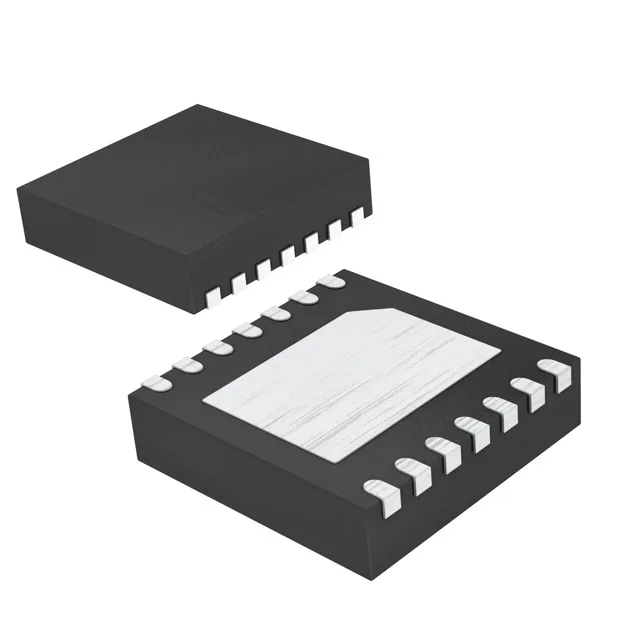
The DS4420N+: The 0.50 mm pitch on the perimeter leads is manageable with a standard reflow profile, but the centre pad demands a stencil aperture that doesn't bridge to the side leads. Surface-mount only — no through-hole variant. The 14-WFDFN footprint is compact enough for space-constrained audio paths in portable or embedded gear, but the lack of visible leads means optical inspection is the only way to confirm the centre-pad solder joint.
What the Class AB topology and feature set deliver on the bench
Class AB output stage combines the crossover distortion of Class B with the quiescent current of Class A — the DS4420N+ is a mono (1-channel) amplifier. The differential inputs reject common-mode noise picked up on the audio line, which matters when the input trace runs past a switching regulator or digital bus. The I²C interface lets a microcontroller set volume, mute the output, or put the amp into standby — no separate control pins needed. Standby cuts the supply current to near-zero for battery-powered equipment. The mute function holds the output at the DC bias point so there is no pop when unmuting. Supply range is 4.5V to 5.5V — a single 5V rail is enough. The lower end at 4.5V gives headroom for a 5V rail that droops under load, typical in USB-powered or battery-backed designs. No negative supply required.
Lifecycle and compliance — active production, ROHS3, no second-source on record
The part ships in Tube packaging. For volume assembly, confirm the tube-to-reel transfer with your contract manufacturer — the 14-TDFN package is tape-and-reel compatible, but the ordering code may differ for reel quantities.