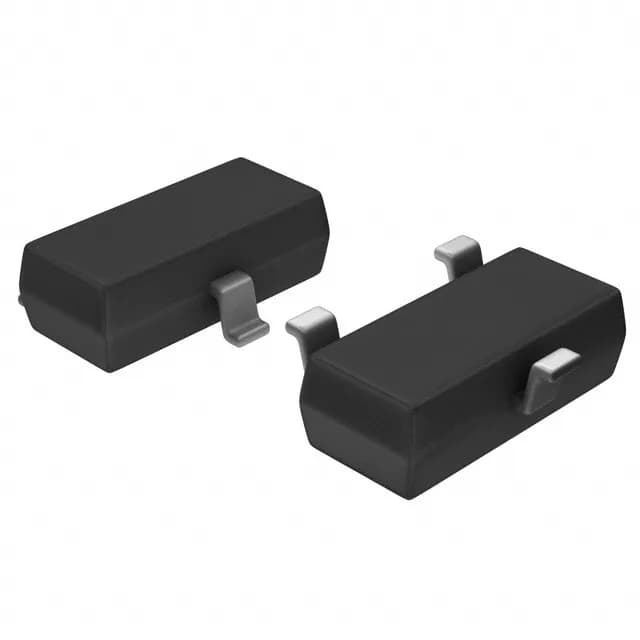
What this 224-bit OTP EPROM does on your board
The Maxim Integrated DS28E10R+T is a 224-bit one-time-programmable (OTP) EPROM that communicates over a single-wire 1-Wire interface. It stores a small, non-volatile payload — 28 bytes organized as 28 x 8 — that gets written once and never changes. The 1-Wire bus means only one data line plus ground connects it to the host, which saves a pin on a microcontroller or a dedicated reader IC. The SOT-23-3 package takes up almost no board area, so it fits into space-constrained designs like a sensor probe or a consumable cartridge that needs a read-only identity or calibration constant.
OTP memory: what it means for your BOM and firmware strategy
Because the DS28E10R+T is EPROM - OTP, the data is written at the factory or during a one-time programming step and cannot be erased or rewritten. That makes it a good fit for authentication tokens, serialization, or calibration values that must stay fixed for the life of the product. It is not a general-purpose EEPROM — if your design needs field-updatable parameters, look at a 1-Wire EEPROM instead. The trade-off is simplicity: no wear-leveling, no erase cycles, and no risk of accidental overwrite.
Lifecycle and sourcing reality
The DS28E10R+T carries an Active lifecycle status with ROHS3 compliance. If you are qualifying a new design, this is a safe choice for a long production run. For existing boards, the active status means you can order against an RFQ without worrying about last-time-buy deadlines.