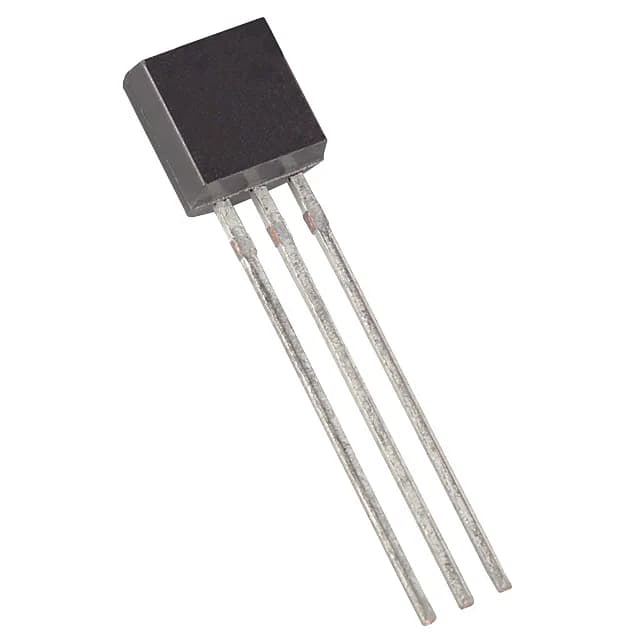
16 Kbit 1-Wire EPROM — what it is and where it fits
The Maxim DS2505+ is a 16 Kbit one-time programmable (OTP) EPROM that communicates over a single-wire interface (1-Wire). It is organized as 16K x 1 bit and packaged in a through-hole TO-92-3 (TO-226AA) case. The 1-Wire bus reduces interconnect to one data line plus ground, making this part a natural fit for add-on identification, calibration constant storage, or configuration data in systems where a separate I²C or SPI bus is not available or where cabling must be minimized. Typical deployment includes accessory recognition in battery packs, printer cartridges, medical probes, and industrial sensors that need a small, non-volatile, factory-locked memory block.
15 µs access — what it means for the bus
The 15 µs access time is the time from the end of the read command to data valid on the 1-Wire bus. This is slow compared to parallel or SPI memory, but the 1-Wire protocol runs at typical bit rates of 15-90 kbps, so the access time is not a bottleneck for the small data payloads this part is designed for — a few tens of bytes per read transaction. The real constraint is the OTP nature: once a byte is programmed (with the 1-Wire programming command), it cannot be erased or rewritten. Plan the write process carefully before assembly.
OTP memory: no field updates possible
Because the DS2505+ uses EPROM - OTP technology, every memory cell can be written exactly once. There is no erase cycle, no wear-leveling, and no reprogramming. This makes the part ideal for permanent serialization, cryptographic key storage, or factory-calibration data that must not be altered after deployment. For the procurement side, this means the programming step must happen before the part is soldered — either pre-programmed by a distributor or programmed in-house with a 1-Wire programmer before placement. The industrial temperature range (-40°C to 85°C) supports outdoor and engine-bay environments where the data must remain stable over the product life.
Lifecycle and sourcing
The DS2505+ carries an Active lifecycle status from Maxim Integrated (now part of Analog Devices).