What the E1/HDLC transceiver does on the board
The DS21354LN+ is a single-chip transceiver with an integrated HDLC controller — it handles the full physical-layer framing and data-link packetisation for a single line (2.048 Mbps). That means it replaces a multi-chip solution: a line interface unit plus a separate HDLC controller, saving board area and reducing the BOM count on telecom line cards, access multiplexers, and CPE equipment.
Supply rail tolerance and what it means for the regulator
The supply range is 3.14 V to 3.47 V — a tight 330 mV window centred on 3.3 V. A standard 3.3 V LDO with ±2% tolerance (3.23 V to 3.37 V) stays inside the band, but a buck converter with 50 mV ripple needs the output set point above 3.19 V to keep the troughs above the 3.14 V floor. Drawing 75 mA typical, the transceiver's own dissipation in the 100-LQFP package is under 260 mW — no forced airflow needed in a ventilated enclosure, but the thermal pad on the 14x14 mm body should get a via-stitched copper pour on the PCB.
Temperature grade and deployment environment
This covers outdoor cabinets, unheated comms shelters, and the inside of a roadside access multiplexer where the internal air temperature can hit 70°C on a summer day.
Package and rework bench reality
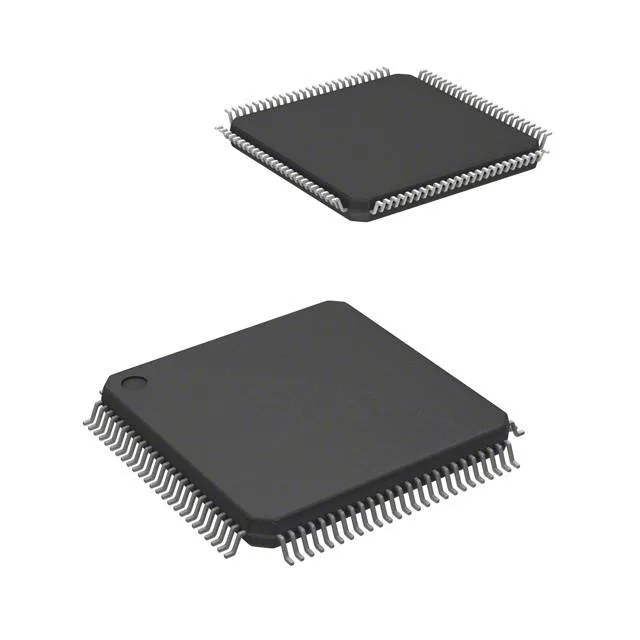
100-LQFP, 14x14 mm body, 0.5 mm pitch — a standard fine-pitch QFP that any rework station with a bottom preheater and a hot-air nozzle can remove and replace. The exposed pad on the bottom centre needs a stencil aperture for the thermal via array; without it the centre joint voids and the thermal resistance climbs. Supplied in tray format — not tape-and-reel, so pick-and-place feeders need a tray feeder or a tube adapter. For a repair bench pulling one-off replacements, the tray is actually easier: no tape to cut, no reel to store.