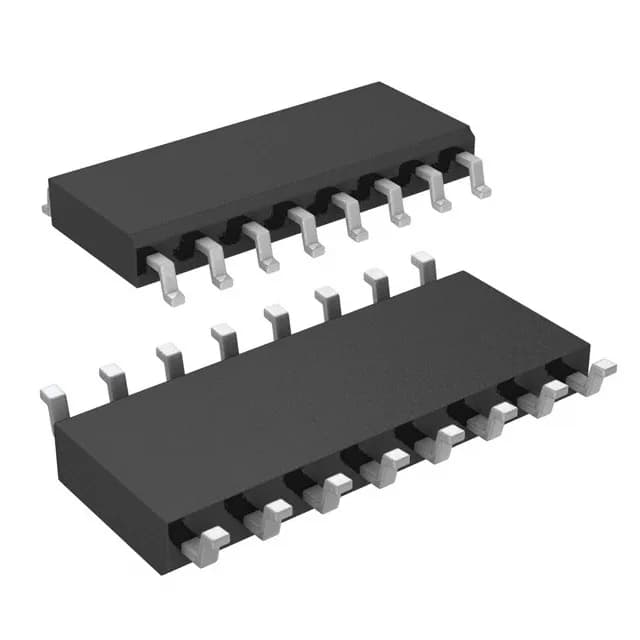
Dual 45kΩ logarithmic digital pot with I²C and non-volatile wiper storage
The Maxim Integrated DS1882Z-050+ is a dual-channel, 64-tap digital potentiometer with a logarithmic taper, designed for audio volume control and similar applications where a human-perceptual response curve is needed. Each of the two independent pots is 45kΩ end-to-end, with a typical wiper resistance of 160Ω. The wiper position is stored in non-volatile memory, so the setting persists through power cycles. Communication is over an I²C interface, and the part includes a mute function, selectable I²C address, and zero-cross sensing to eliminate clicks during wiper transitions. Housed in a 16-pin SOIC package (3.90 mm width), the DS1882Z-050+ operates over the industrial temperature range of -40°C to +85°C, making it suitable for audio mixing consoles, broadcast equipment, automotive infotainment, and industrial control panels where ambient temperatures can climb.
Logarithmic taper — why it matters for audio
A linear pot changes resistance by the same step per tap; a logarithmic pot approximates the human ear's response, where equal increments in perceived loudness require exponential resistance changes. The DS1882Z-050+'s logarithmic taper means a 64-step volume control feels natural across the full range, from whisper to full output. If your design calls for a linear curve — for example, as a voltage divider in a servo feedback loop — this part is the wrong choice; look for a linear-taper digital pot instead.
I²C interface and address flexibility
The DS1882Z-050+ communicates via the I²C bus, a two-wire serial interface common in mixed-signal systems. The selectable address feature lets you place up to two of these devices on the same bus without address conflicts — useful for stereo or multi-channel audio boards where each channel needs its own pot. The mute function allows instant attenuation to minimum volume without reprogramming the wiper register, handy for power-on muting or fault conditions.
Zero-cross sense and pop-free transitions
The zero-cross sense feature synchronises wiper changes to the AC zero-crossing point of the audio signal, which prevents audible clicks or pops when the volume is adjusted. This is a differentiator versus simpler digital pots that change resistance immediately on receipt of an I²C command, potentially generating a transient that couples into the audio path.
Lifecycle and sourcing
The DS1882Z-050+ is listed as Active and ROHS3 compliant. For BOM planning, this means no last-time-buy pressure and normal lead times through distribution.