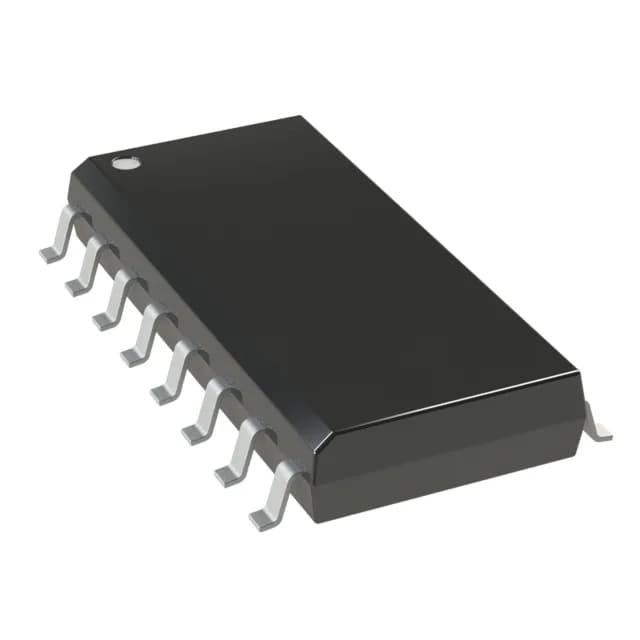
What this part is — a logarithmic digital pot for audio
The Maxim Integrated DS1881E-050+T&R is a dual-channel, 45kΩ digital potentiometer with a logarithmic taper, 64 wiper positions per channel, and a non-volatile memory that stores the wiper setting on power-down. The logarithmic taper makes it a natural fit for audio volume and tone control — human hearing responds logarithmically, so a linear pot would feel uneven across the rotation. It communicates over an I²C bus, which keeps the wiring simple on a mixed-signal board. The 16-TSSOP package is surface-mount, so it goes through reflow with the rest of the SMD passives.
Package and mounting
The mute function lets you quickly attenuate the output without having to write a zero value to the wiper register — handy for click-free muting in audio paths. Zero-cross sense means the wiper only moves when the signal crosses zero, which eliminates the audible pop that happens when a wiper changes position mid-cycle. The selectable address lets you put up to four of these on the same I²C bus by tying the address pins high or low. The wiper resistance is 160Ω typical, which is low enough that it doesn't dominate the total resistance in most audio divider circuits. The temperature coefficient is 750ppm/°C typical — not precision-grade, but fine for audio where the ear won't track a few ohms of drift.
Where it goes — audio gear, industrial controls, test equipment
The logarithmic taper and zero-cross mute target it squarely at audio applications: mixing consoles, powered speakers, guitar amplifiers, AV receivers, and any volume control that needs to be microcontroller-driven. The industrial temperature range (-40°C to +85°C) also makes it usable in factory automation panels, outdoor telecom gear, and test equipment that lives in a warm rack. The non-volatile memory means it powers up at the last-set volume, which is important for equipment that shouldn't blast full output on a cold start.
Lifecycle and sourcing — active, no LTB clock ticking
The DS1881E-050+T&R is listed as Active in production with ROHS3 compliance. That means no last-time-buy deadline hanging over a new design — you can qualify it into a BOM without worrying about a sudden EOL notice next quarter.