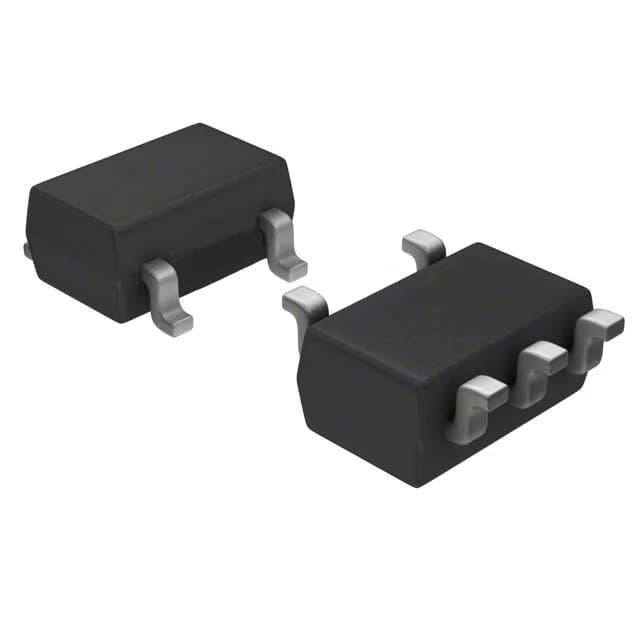
What this supervisor does and where it fits
The Maxim Integrated DS1819BR-10+T&R is a single-channel voltage supervisor from the MicroMonitor™ family, designed to assert a reset signal when the monitored supply drops below 2.925V and hold it for a minimum of 140ms after the supply recovers. It's a straightforward power-on reset and brown-out monitor for 3V-rail systems — think microcontrollers, FPGAs, or any digital IC that needs a clean start. The push-pull output gives both active-high and active-low reset signals from one package, so it can drive a reset line directly without an external pull-up. The SOT-23-5 footprint keeps board area small, and the -40°C to 85°C industrial temperature range covers most embedded, telecom, and industrial control environments.
2.925V threshold — what it means for your rail
The 2.925V threshold is the trip point where this part decides the supply is too low. That's a 3V-rail supervisor, not a 3.3V one — if your design runs on a nominal 3.3V rail, this part will assert reset when the rail dips to about 2.925V, which is well below the typical 3.0V to 3.3V operating range of most 3.3V logic. It's a good fit for 3.0V or 3.1V nominal supplies, or as a brown-out detector where you want a late warning before the core loses state. For a 3.3V rail with tighter tolerance, look at the 3.0V or 3.3V threshold variants in the same family.
140ms reset timeout — sizing the hold time
The 140ms minimum reset timeout means the output stays asserted for at least 140ms after the supply crosses back above the threshold. That's long enough to let most power supplies settle and oscillators stabilise before the processor starts executing code. If your system has a fast-starting oscillator or a supply that rings on power-up, this timeout gives a comfortable margin. No external timing capacitor needed — it's all internal.
Active high and active low from one push-pull output
The DS1819BR-10+T&R offers both active-high and active-low reset signals from a single push-pull output stage. That means you can drive a microcontroller's active-low reset pin and also feed an active-high signal to an FPGA or a power sequencer without adding an inverter. The push-pull output eliminates the need for an external pull-up resistor, saving a component and a PCB trace. No open-drain option here — if you need wired-OR capability, you'd look at the open-drain variants in the MicroMonitor family.
Sourcing and lifecycle — active production, no LTB risk
The ROHS3 compliance is current. For BOM planning, this means no forced redesign for obsolescence in the near term.